CHRISM MASS March 31st 2026, Westminster Cathedral, London
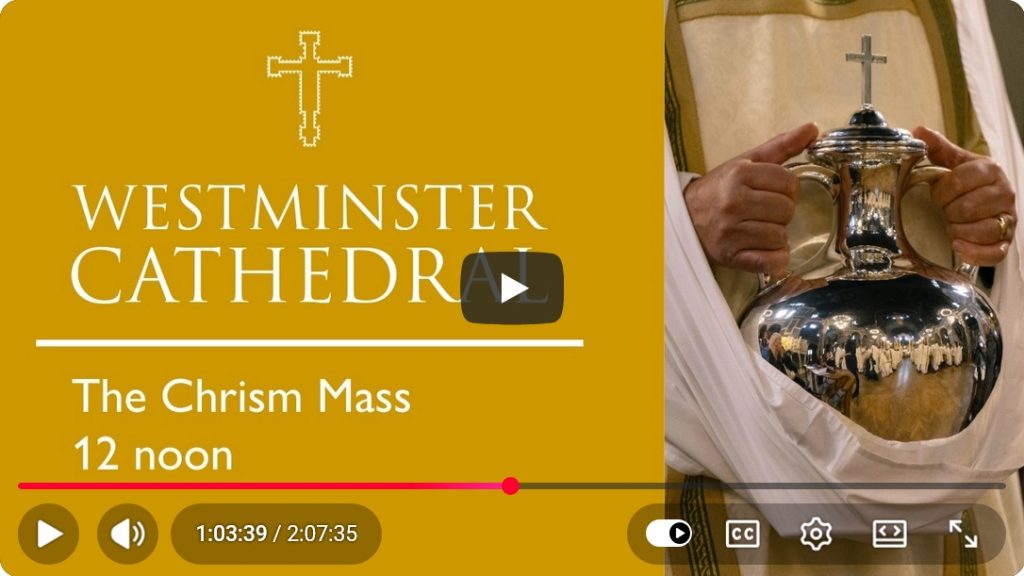
The Chrism Mass:Blessing of Holy Oils
The Chrism Mass is celebrated annually during Holy Week in every Catholic (arch)diocese. This Mass is traditionally held on the Tuesday of Holy Week. During the service, priests, deacons, and representatives of the entire diocesan community gather in the presence of the Archbishop, who blesses the Holy Oils to be utilised throughout the forthcoming year.
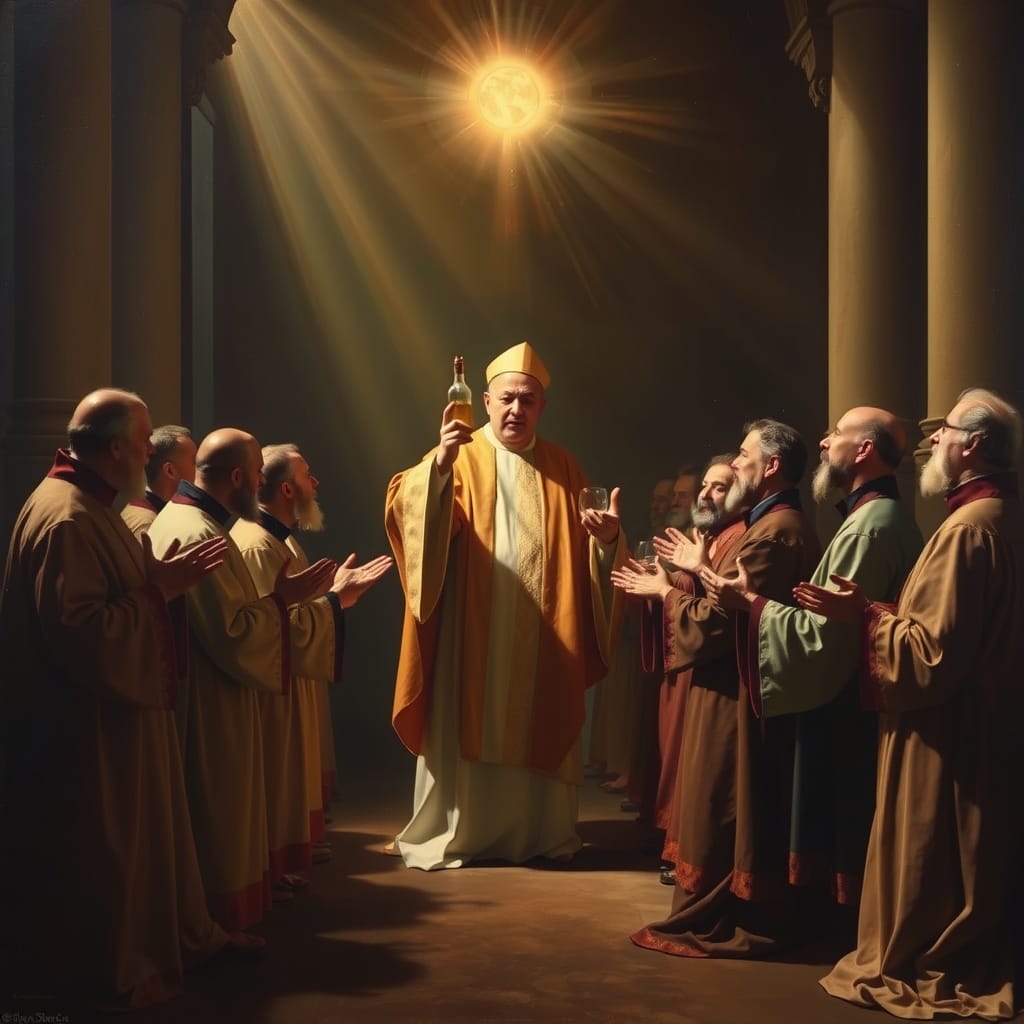
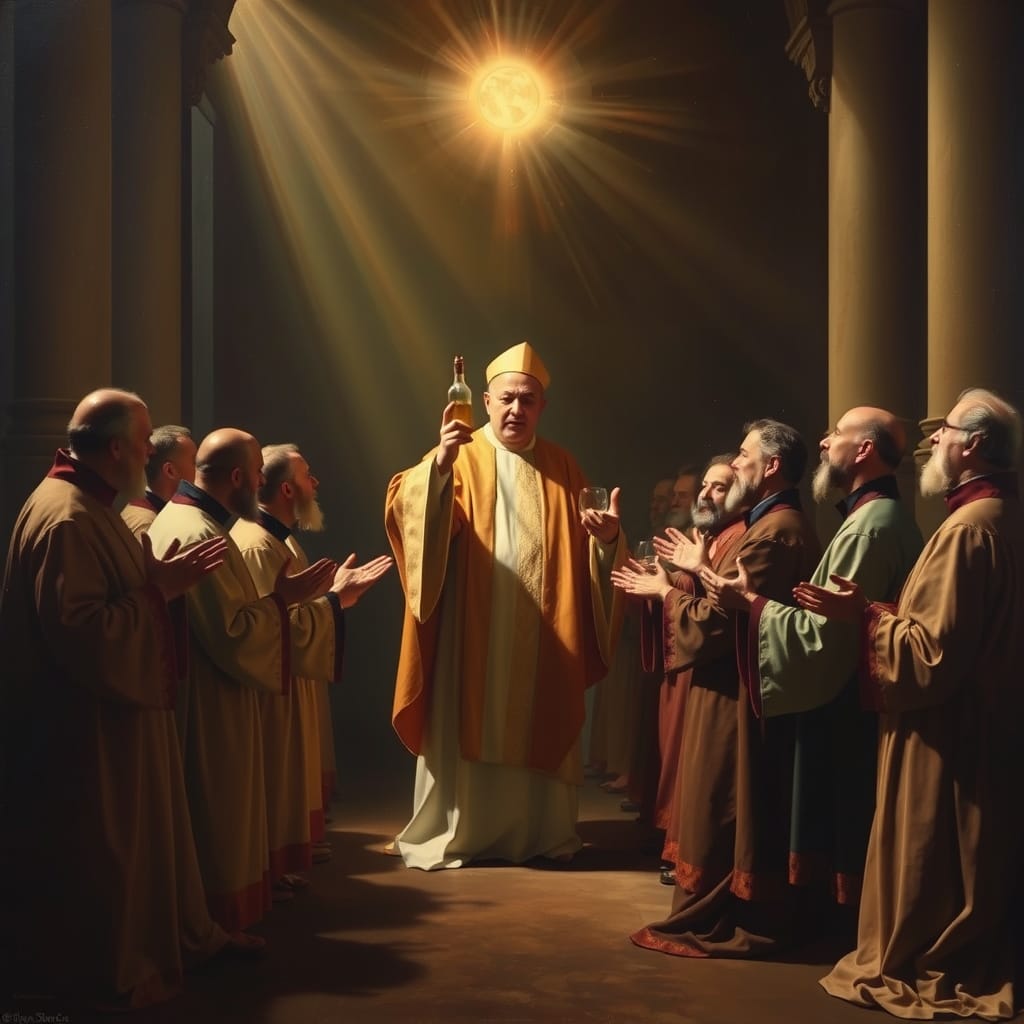
White or gold signifies the festive and sacramental nature of the event, celebrating the institution of the priesthood and the blessing of the Oils of Chrism, Catechumens, and the Sick.
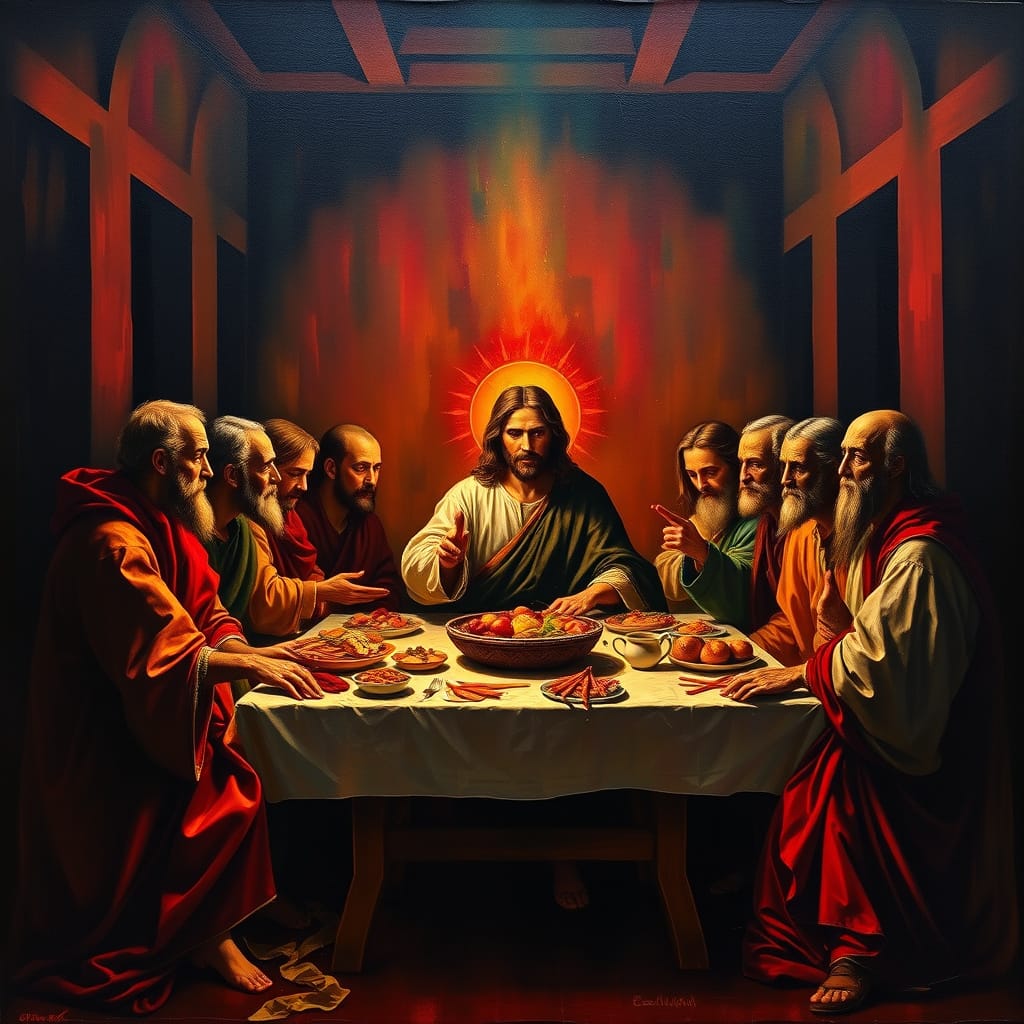
The Evening Mass of the Lord’s Supper on Holy Thursday also features white or gold vestments, whereas subsequent services on Good Friday typically utilise red.
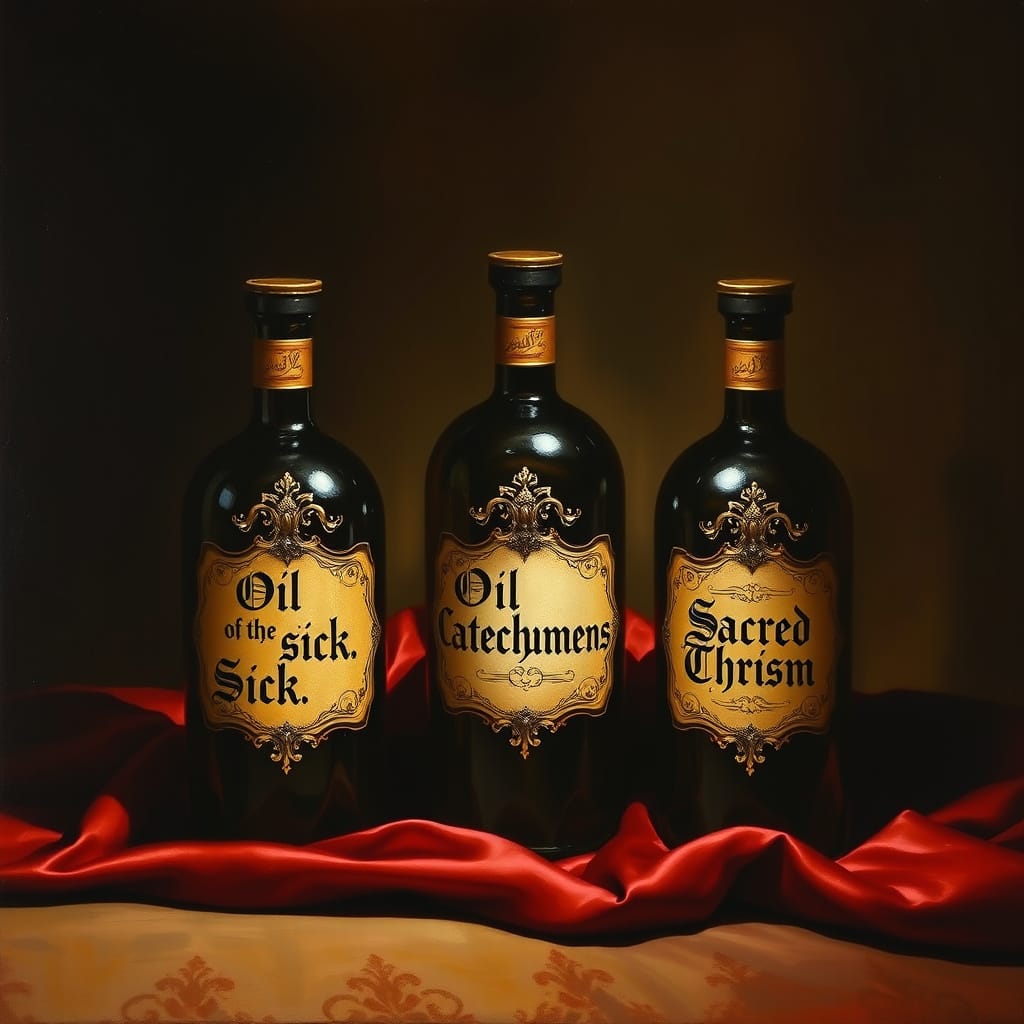
Oil of the Sick, Oil of Catechumens, Sacred Chrism
Whenever these Holy Oils are employed within a diocese, the symbolic presence of the bishop who consecrated them is always maintained. Unity, Renewal of Vows and Promises. The Chrism Mass serves as an important observance of our unity in Christ through Baptism and the holy anointing, facilitated by the ministry of the archbishop and his priests. It also marks a significant moment where the bond between the archbishop and his priests—forming the presbyterate—is visibly reaffirmed.
Throughout the liturgy, the entire assembly is called to renew its baptismal promises; deacons and priests also reaffirm their vows of obedience to their (arch)bishop and their commitment to serve God’s people. At the conclusion of the Mass, the Holy Oils are returned to the parishes of the archdiocese for use in the coming year.
The bishop is to be considered the high priest of his flock, from whom the life of his people in Christ is derived and upon whom it depends. Therefore, all should regard highly the liturgical life of the diocese centred around the bishop, especially within his cathedral church.
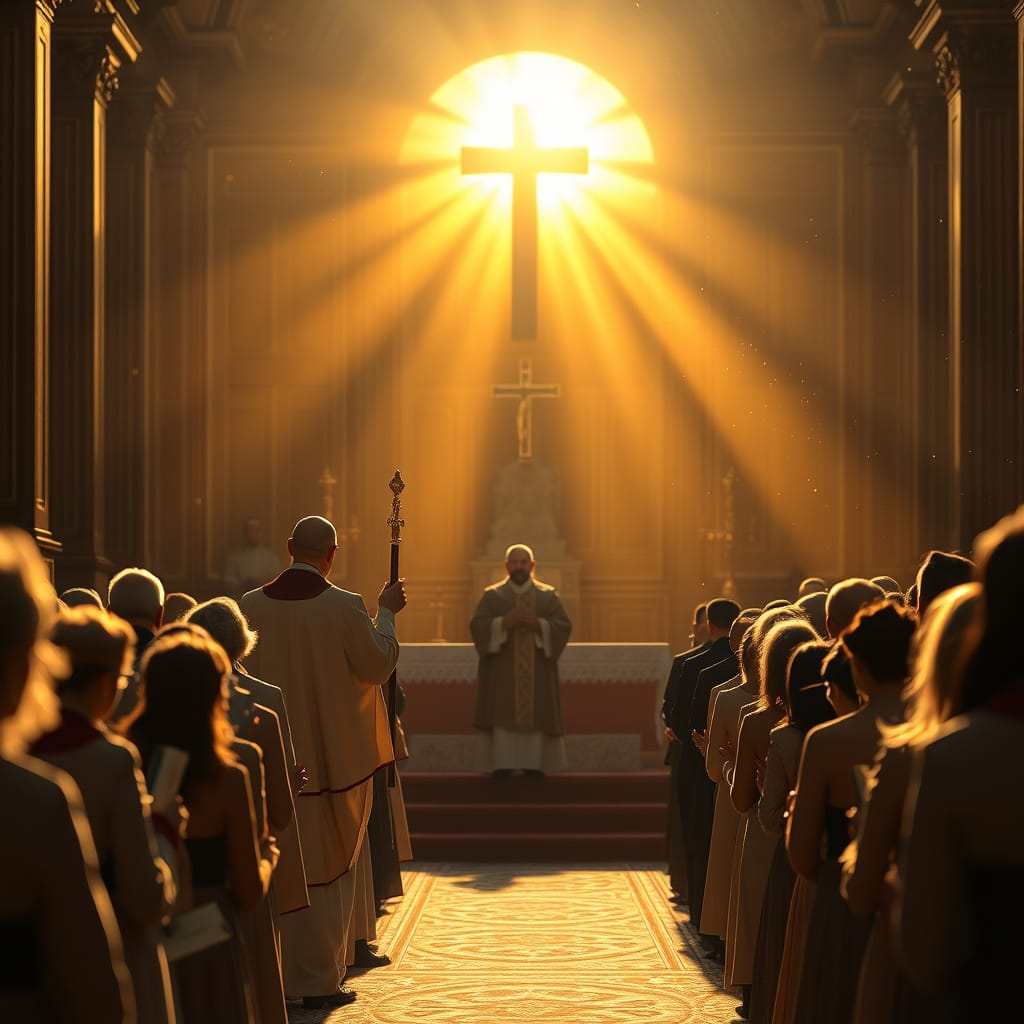
They must be convinced that the primary manifestation of the Church is the full, active participation of all God’s faithful in the same liturgical celebrations—particularly in the Eucharist—united in prayer at one altar, presided over by the bishop and surrounded by his college of priests and ministers.”
(Second Vatican Council, Constitution on the Sacred Liturgy, Sacrosanctum Concilium, No. 41)
The Origins of Oil and Anointing-Ancient Greece and Rome:
Athletes used oil to massage muscles, believing it provided strength and protection.
Oil was valued for its healing qualities and was poured over the head as a sign of belonging, such as during Roman soldier initiations.
Old Testament:
Used to consecrate altars, sacred spaces, and vessels.
Employed in the anointing of priests, prophets, and kings—each designated by God’s Spirit to serve and lead.
Signifies God’s strength, favour, and joy in serving Him (see Psalm 45, 8: “God your God has anointed you with the oil of gladness…”).
An ingredient in preparing food for sustenance.
Used as a personal adornment and as a gesture of welcome, poured over guests’ heads.
The Messiah: God’s Anointed One
The biblical term for one who is anointed is ‘messiah’, which in Greek becomes ‘Christos’, translating as ‘Christ’.
Old Testament:
II. The Messiah: God’s Anointed One
Jesus: God’s Anointed One:
- When we refer to Jesus as our Messiah, we acknowledge that He was anointed by God to proclaim the Gospel—the Good News of salvation—to His people.
- In Luke, Jesus states: “The Spirit of the Lord is upon me, because He has anointed me to bring good news to the poor…” (Luke 4:18ff).
Christians as Anointed Ones:
- Baptism marks us as Christians, that is, as anointed ones sharing in the life of the crucified and risen Jesus, the anointed Son of God.
- Before baptism, catechumens are anointed with the Oil of Catechumens, which strengthens and purifies.
- Following water baptism, anointing with the Oil of Chrism consecrates us as members of Christ’s Body, sharing in His priestly, prophetic, and kingly roles.
- This anointing grants us the Holy Spirit’s strength to live out our baptismal promises. Confirmation completes this grace, sealing us with the Holy Spirit’s gifts.
III. The Three Holy Oils
The Catechism of the Catholic Church summarises their significance:
“Anointing with oil embodies various meanings within the sacramental life. The pre-baptismal anointing with the Oil of Catechumens signifies cleansing and strengthening; the anointing of the sick signifies healing and comfort. The post-baptismal anointing with Sacred Chrism in Confirmation and Holy Orders signifies consecration. Through Confirmation, the faithful participate more fully in the mission of Jesus Christ and receive the fullness of the Holy Spirit, so that their lives may radiate ‘the aroma of Christ’.” (Catechism of the Catholic Church, No. 1294)
- Oil of the Sick:
Used in the Sacrament of the Sick, it confers Christ’s strength and healing. James advises: “Are any among you sick? They should call the elders [priests] of the Church to pray over them, anointing them with oil in the Lord’s name. The prayer of faith will save the sick…” (James 5:14–15). - Oil of Catechumens:
Employed during Baptism to strengthen with wisdom and courage, as well as to purify from original sin prior to the water baptism. - Holy Chrism:
A mixture of olive oil (symbolising the richness of divine grace) and balsam (representing the sweetness of Christian virtue). It signifies fullness of grace and spiritual strength, and is used for: - Anointing newly baptised persons.
- Sealing candidates in Confirmation.
- Anointing the hands of priests and the heads of bishops during ordination.
- Consecrating churches and altars.
- Preparing catechumens prior to Baptism.
Use in Sacraments:
At Baptism:
Following water baptism, the priest anoints the candidate’s forehead with Chrism, saying:
“God the Father of our Lord Jesus Christ has freed you from sin and given you a new birth by water and the Holy Spirit. He now anoints you with the chrism of salvation. As Christ was anointed Priest, Prophet, and King, so may you live always as a member of His body, sharing in eternal life. Amen.”
At Confirmation:
The bishop anoints the forehead with Chrism, saying:
“Be sealed with the gift of the Holy Spirit.”
In Holy Orders:
- A man ordained as a priest has his hands anointed with Chrism.
- During his episcopal consecration, the bishop anoints the candidate’s head with Chrism.
Other Uses:
- The bishop anoints the altar and the walls of the church during its dedication, symbolising sanctification.
- Holy Chrism is also utilised for the blessing of new church furnishings and other sacred rites.
IV. The Blessing and Distribution of the Holy Oils
During the offertory, the three Holy Oils and balsam are brought forward along with offerings of bread and wine.
The Oil of the Sick is blessed by the bishop during the Eucharistic Prayer. The bishop then incorporates the balsam into the Chrism and prays:
“Make this chrism a sign of life and salvation for those to be reborn in baptism; cleanse away inherited evil, and through this holy oil, make them temples of Your glory, radiant with the goodness of life from You.”
While praying, the bishops and priests extend their hands over the oils, symbolising participation in the bishop’s authority through which Christ sanctifies the Church. The bishop’s breath over the vessel signifies the Holy Spirit, recalling the Spirit’s role in creation (Genesis 1:2b) and Jesus’ breath when He presented Himself to the disciples (John 20:22–23).
After blessing, the bishop also blesses the Oil of Catechumens. The oils are then entrusted to deacons, who distribute them to parish representatives. It is customary for each parish to store the oils in a designated cabinet called an ambry, often situated near the baptismal font, as a reminder of the unifying and strengthening power of the anointing, which is central to our life in Christ through the Church’s ministry.
V. Summary
The Chrism Mass is a celebration of the wider Christian community:
A community gathered around its bishop, forming one body with Christ as its Head.
One whose unity derives from participation in the death and resurrection of Jesus—God’s anointed one—through Baptism.
One that shares in the blessings and grace of Christ’s gift of the Holy Spirit via the sacramental ministry of the Bishop and priests.