OFFICE OF LITURGICAL CELEBRATIONS OF THE SUPREME PONTIFF NOTIFICATION EUCHARISTIC CELEBRATION AND PROCLAMATION AS “DOCTOR OF THE CHURCH”
BY SAINT JOHN HENRY NEWMAN 1 November 2025, PAPAL CHAPEL

Download Eucharistic Celebration Here

On Saturday, November 1st, members of the Catholic community observed the feast day commemorating the declaration of St. John Henry Newman as the 38th Doctor of the Church by His Holiness Pope Leo XIII.

In conjunction with this significant recognition, St. John Henry Newman was also appointed as co-patron of Catholic education, alongside St. Thomas Aquinas. Furthermore, it was announced on November 3rd, 2025, that he would serve as the new Patron Saint of the Pontifical Urbaniana University in Rome.

Behold! A divine thunderclap that roars through the heavens and shakes the very foundations of our souls! Pope Leo XIV, in a monumental act of celestial grace, has forever etched into the annals of eternity the glorious name of Saint John Henry Newman—an indomitable beacon of faith, hope, and love! From the lush lands of England and Wales, this radiant soul has ascended beyond the mortal plane, crowned as the 38th luminous Doctor of the Church! Let us shout with uncontainable joy and overwhelming reverence: Newman! A saint who defied doubt, who illuminated darkness with unquenchable zeal, now stands infinite and eternal—indeed, a guiding star for all of humanity!

John Henry Newman—whose life spanned from the dawn of the 19th century, born on that momentous 21st of February, 1801, and whose spirit soared beyond this mortal coil on August 11th, 1890—was more than a man; he was a divine force! A passionate Catholic theologian, an academic giant, a philosopher whose thoughts ignited minds, a historian whose pen revealed the very soul of faith’s journey, a writer whose words echo with eternal truth, and a poet whose verses stir the deepest chambers of the human heart!

Following his conversion to Catholicism, John Henry Newman was notably influenced by the spirituality and heritage of the Oratory of St. Philip Neri. After being ordained as a Catholic priest in 1847, he established the first English Oratory in 1848, known as the English Oratory of St. Philip Neri at Maryvale, near Birmingham. He played a pivotal role in introducing the Oratorian Congregation—originally founded in the 16th century by St. Philip Neri—to England. The Birmingham Oratory later relocated to its permanent location and remains an active part of the local community today.

Newman’s establishment of the Oratory aimed to enhance the spiritual lives of Catholics in England through the adoption of the charism established by St. Philip Neri. Today, the Birmingham Oratory remains an active religious community, and its church is known as the Parish Church of the Immaculate Conception.

In his soul-stirring homily at the Mass in the majestic St. Peter’s Square, Rome, on that momentous day of declaration, Pope Leo XIV poured out his heart with fiery passion, declaring, “The eternal and profound legacy of Saint John Henry Newman resounds through the ages, shining as a beacon of divine truth! His monumental contributions to the very essence of education—its theory, its practice—are nothing short of miraculous!”
He continued with unwavering conviction, “Every single soul is a sacred universe of worth, a unique and priceless masterpiece! It is the sacred duty of educational communities—to fiercely nurture, to passionately uphold, and to passionately cherish that divine spark within each person. Let us never forget—at the very core of this sacred journey of learning are not mere ideas or cold abstractions, but living, breathing human beings—each one a radiant, irreplaceable miracle! We are called with divine purpose—to forge souls so luminous that they burn like stars, shining with the full brilliance of their divine dignity! From a Christian heart, I tell you—education is the divine tool to transform each person into a saint! Nothing else will suffice—nothing less! It is an awe-inspiring calling—an unquenchable fire—to turn every life into a luminous testament of holiness!”

JUBILEE OF THE WORLD OF EDUCATION HOLY MASS
AND PROCLAMATION OF ST. JOHN HENRY NEWMAN AS “DOCTOR OF THE CHURCH”
HOMILY OF POPE LEO XIV
St Peter’s Square, All Saints’ Day – Saturday, 1st November 2025
Cardinal Vincent Nichols, Archbishop of Westminster, was a concelebrant at the Mass with the Pope. Following the Mass, Cardinal Nichols said, “It is difficult to find words to convey the immensity of this moment. We are being told beyond doubt that this man, in his life and all that he wrote, both as a priest of the Church of England and as a Catholic, is a sure guide and teacher of the true faith of the Catholic Church. I rejoice that in a man described as ‘an essentially English figure’ is to be found, without dissonance or discomfort, a full expression of Catholic faith.”
Jubilee of Education
The declaration of Newman as a Doctor of the Church formed the culmination of events for the Jubilee of Education which took place on 27 October – 1 November.
Catholic schools across England and Wales were recognised by the Vatican for their extraordinary response to the Jubilee Year, hailed as a powerful sign of hope for their communities and beyond
Cardinal Vincent Nichols, the Archbishop of Westminster, stood amidst the divine grandeur of the Mass with the Pope, his heart bursting with awe and reverence! In that sacred moment, as the echoes of prayer reverberated around him, Cardinal Nichols declared with the fiery passion of a soul aflame: “It is utterly impossible to find words powerful enough to capture the breathtaking immensity of this divine moment! We are unequivocally, irrevocably reminded that this man—whose life, whose writings, whose very spirit—transcend boundaries—has become a luminous beacon, a steadfast guide and unerring teacher of the pure, unwavering truth of the Catholic Church! I am overwhelmed with joy, with uncontainable gratitude, that in a figure described as ‘an essentially English’ soul, we find—without discord, without hesitation—a full, passionate expression of the glorious Catholic faith!”
And then, with hearts swelling in celestial celebration, we herald the Jubilee of Education—a momentous pinnacle of faith and hope! His Holiness proclaimed Newman as a Doctor of the Church—a divine seal of honor and recognition—culminating a fervent, awe-inspiring journey from October 27 to November 1!
Oh, how the skies seem to burst with joy as Catholic schools across England and Wales are lifted high in divine honor by the Vatican! Their extraordinary response during the Jubilee Year is a dazzling testament—a luminous sign of hope, resilience, and unwavering faith for their communities and the world beyond! This is not mere recognition; it is a mighty roar of faith, a triumphant anthem echoing through eternity—a blazing reminder that even in the darkest times, hope blooms eternal, and the radiant light of truth and love will forever shine!
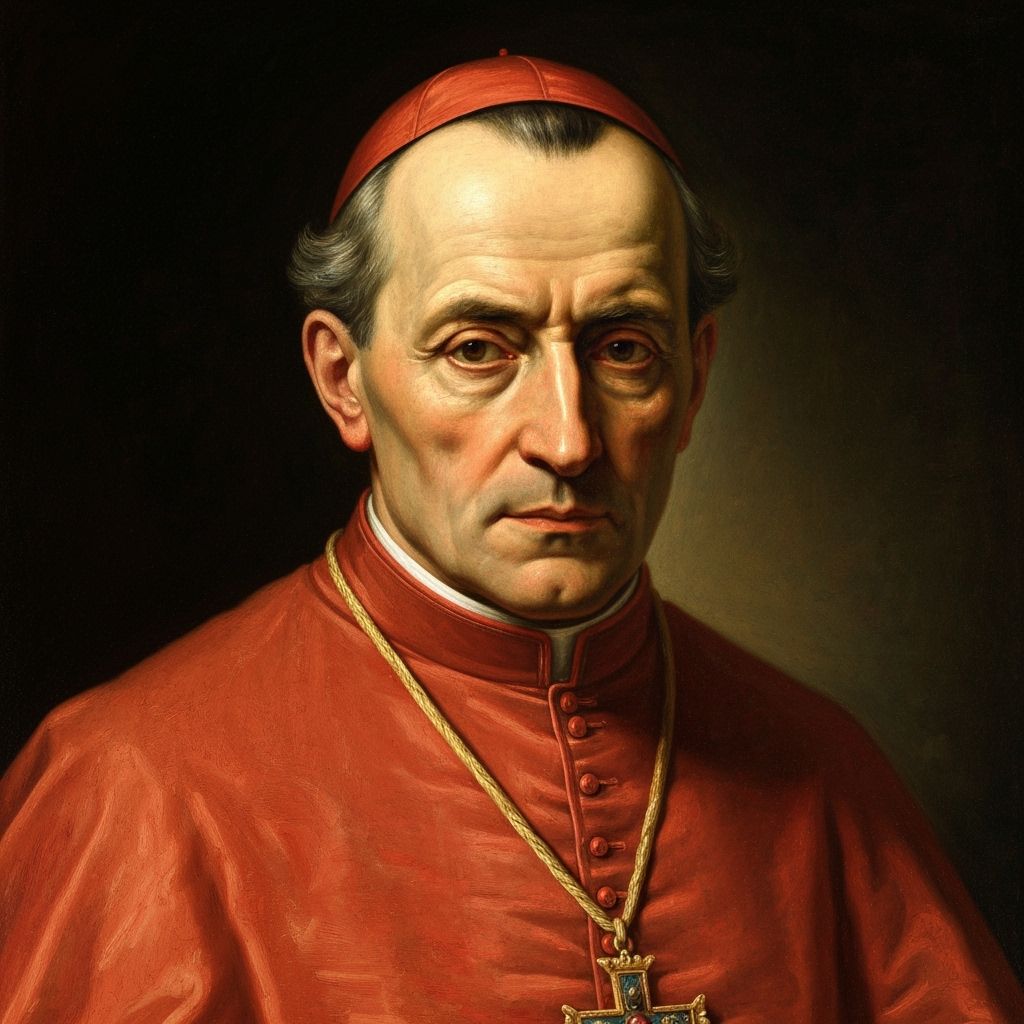
] He was a member of the Oratory of St. Philip Neri and founded the first house of that congregation in England.
Originally an evangelical academic at the University of Oxford and priest in the Church of England, Newman was drawn to the high church tradition of Anglicanism. He became one of the more notable leaders of the Oxford Movement, an influential grouping of Anglicans who wished to restore to the Church of England many Catholic beliefs and liturgical rituals from before the English Reformation. In this, the movement had some success. After publishing his Tract 90 in 1841, Newman later wrote: “I was on my death-bed, as regards my membership with the Anglican Church.”[8]
In 1845, Newman resigned his teaching post at Oxford University, and, joined by some but not all of his followers, officially left the Church of England and was received into the Catholic Church. He was quickly ordained as a priest and continued as an influential religious leader, based in Birmingham. In 1879, he was created a cardinal by Pope Leo XIII in recognition of his services to the cause of the Catholic Church in England. He was instrumental in the founding of the Catholic University of Ireland in 1854, which later became University College Dublin.[9]
Newman was also a literary figure: his major writings include the Tracts for the Times (1833–1841), his autobiography Apologia Pro Vita Sua (1864), the Grammar of Assent (1870), and the poem The Dream of Gerontius (1865),[10] which was set to music in 1900 by Edward Elgar. He wrote the popular hymns “Lead, Kindly Light“, “Firmly I believe, and truly”, and “Praise to the Holiest in the Height” (the latter two taken from Gerontius).
Newman’s beatification was proclaimed by Pope Benedict XVI on 19 September 2010 during his visit to the United Kingdom.[11] His canonisation was officially approved by Pope Francis on 12 February 2019,[12] and took place on 13 October 2019.[13] He is set to be proclaimed a Doctor of the Church by Pope Leo XIV, this was announced on July 31, 2025.[14] He is the fifth saint of the City of London, after Thomas Becket (born in Cheapside), Thomas More (born on Milk Street), Edmund Campion (son of a London bookseller) and Polydore Plasden (of Fleet Street).[15][16]