Pope Leo XIV’s Holy Mass on the Consistory with the Cardinals | January 8th 2025
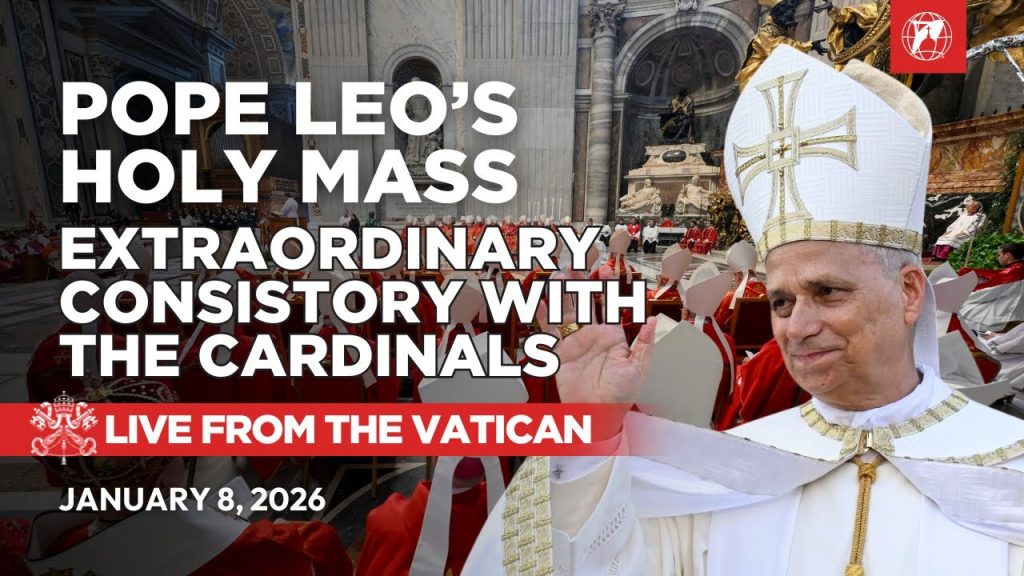
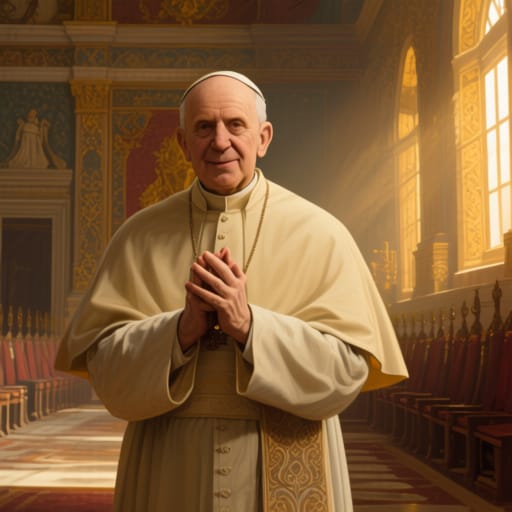
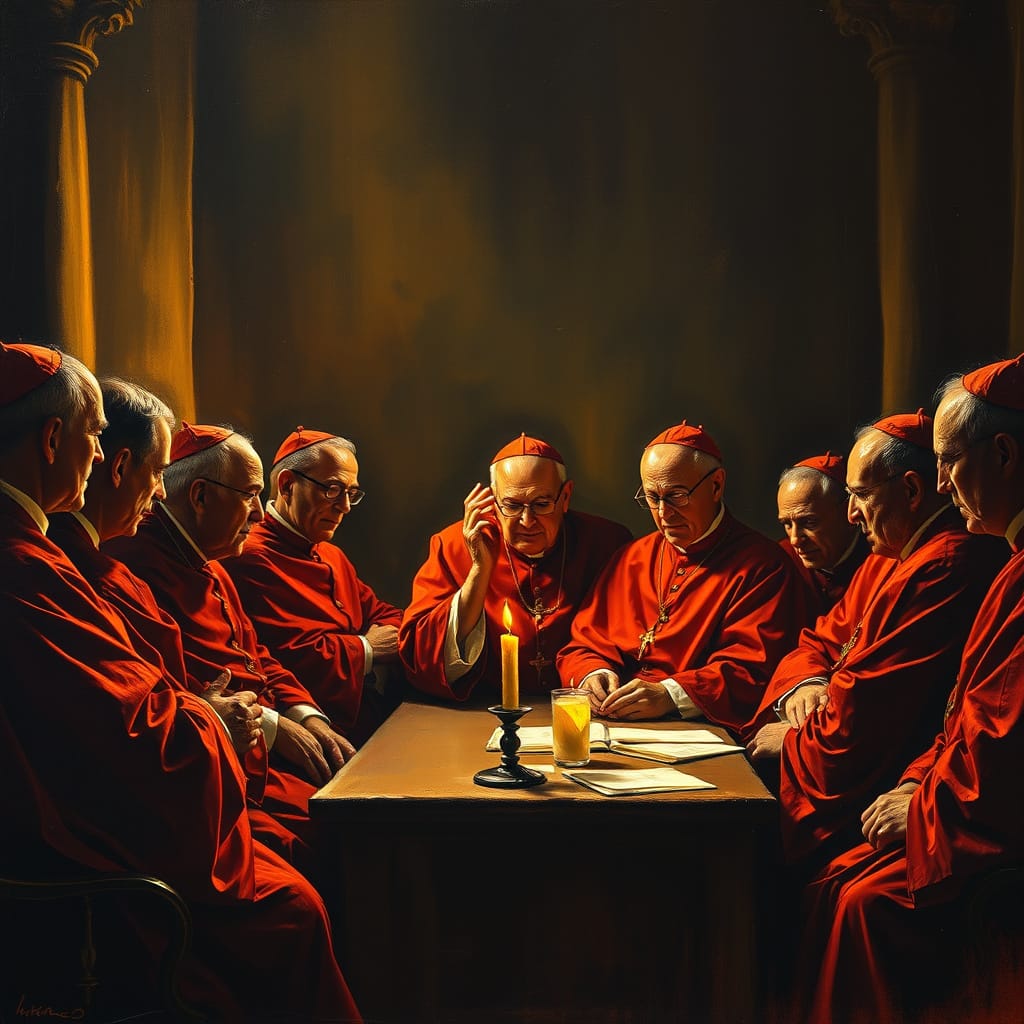
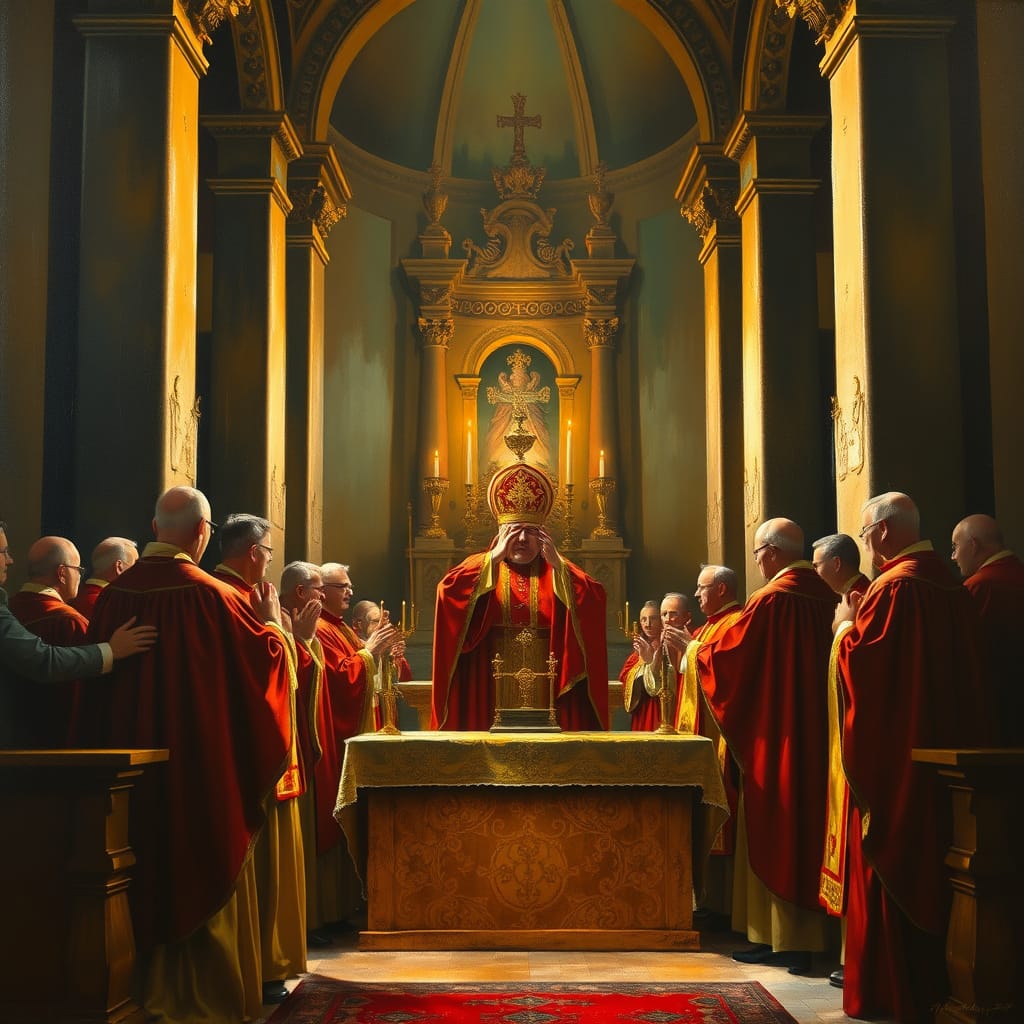
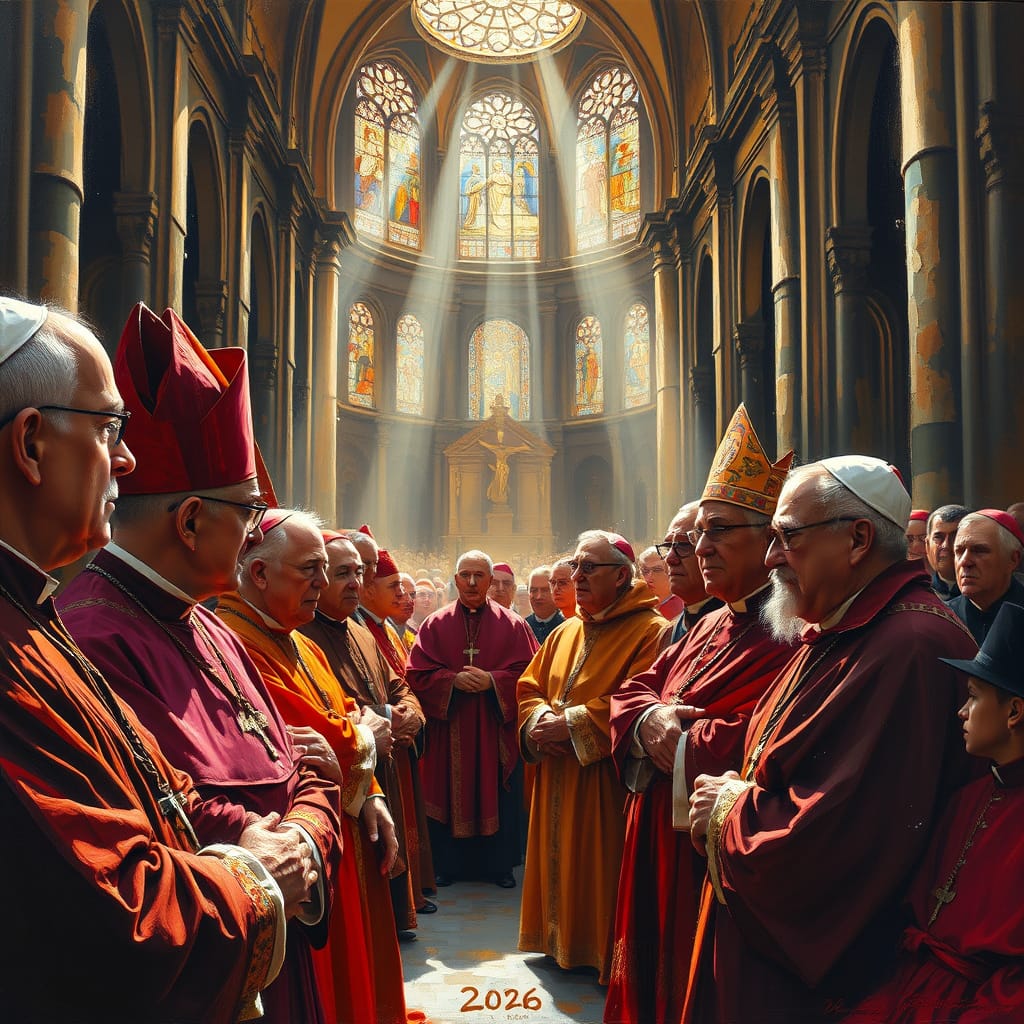
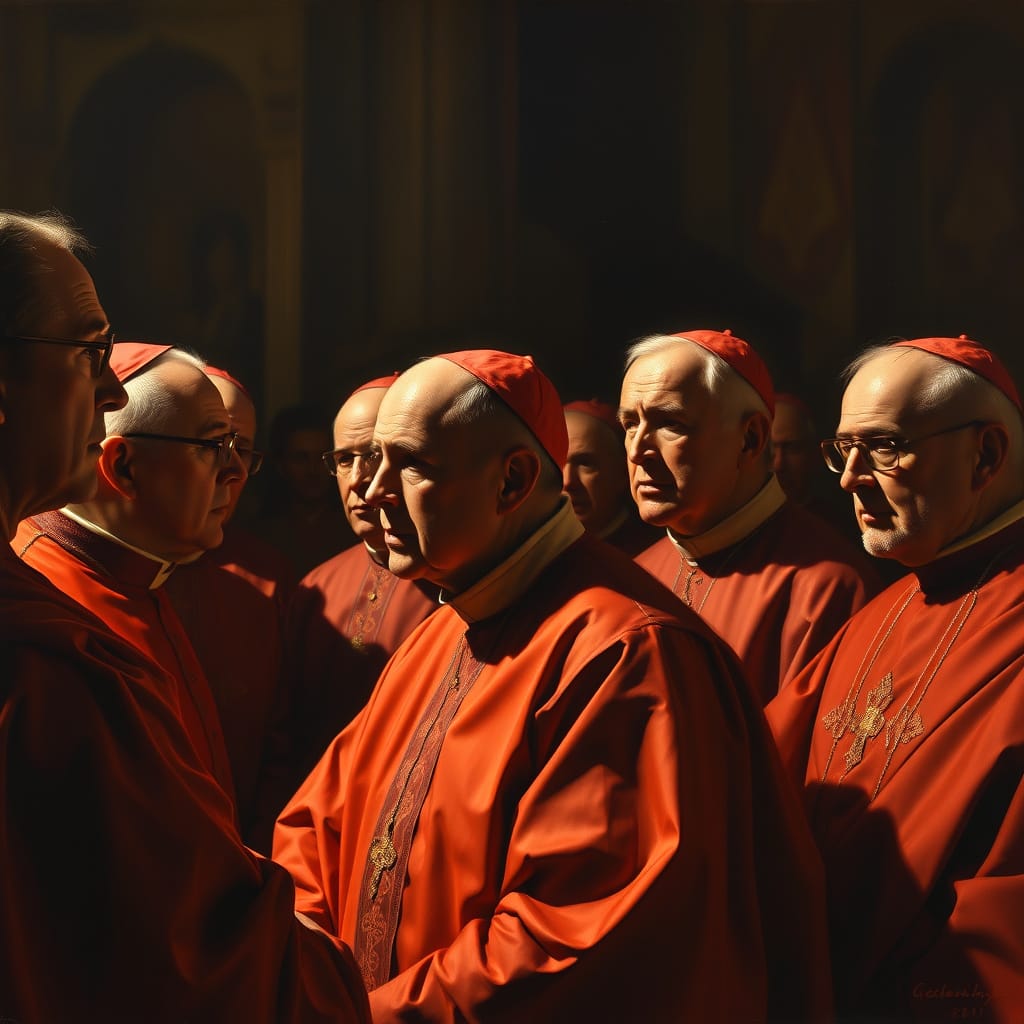
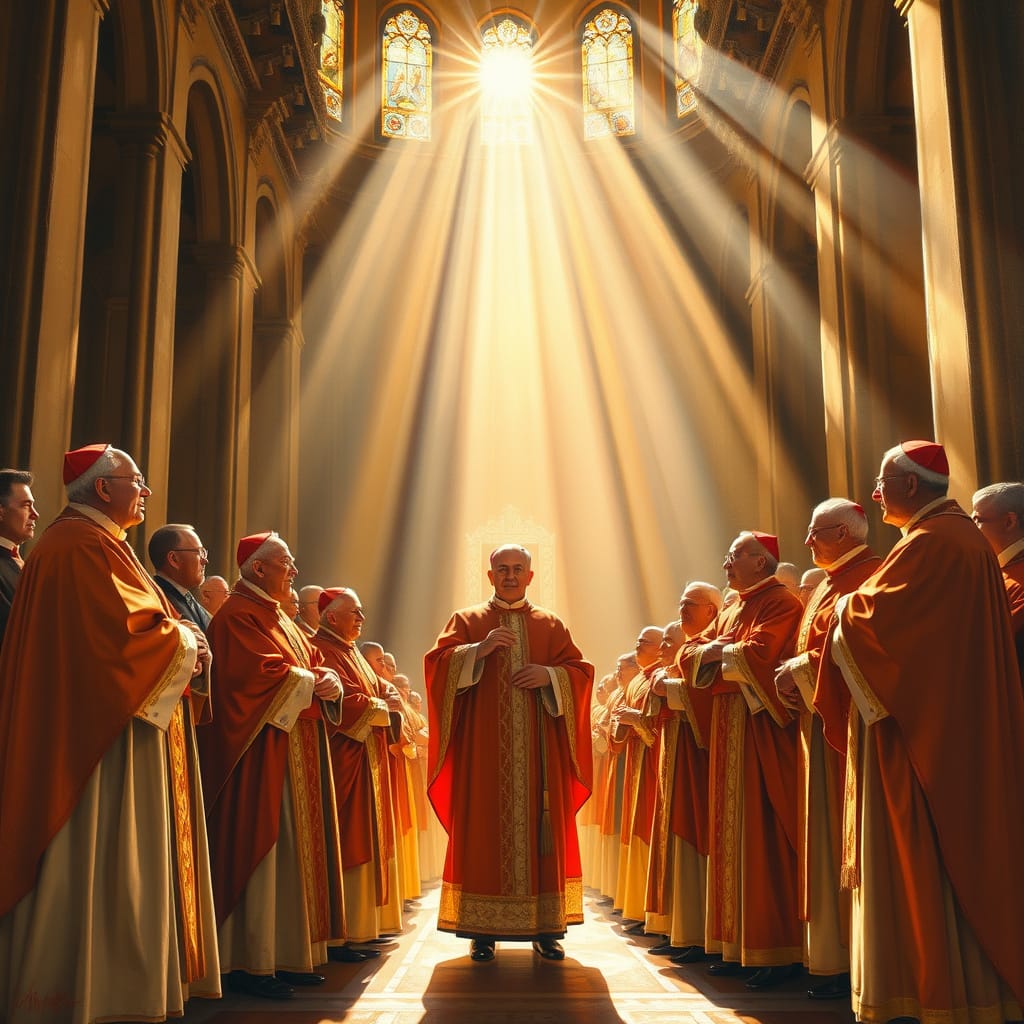
On January 8, 2026, at St. Peter’s Basilica, during the second day of the Extraordinary Consistory of Cardinals, His Holiness Pope Leo XIV presided over a solemn Mass with the attending Cardinals from various regions around the world. The purpose of this assembly was to facilitate discussions and consultations regarding the future direction and strategic initiatives of the Church. He mentioned that the term “Consistory” originates from a Latin root meaning “to halt,” indicating that the Cardinals have temporarily paused their regular duties to be present with him in Rome.
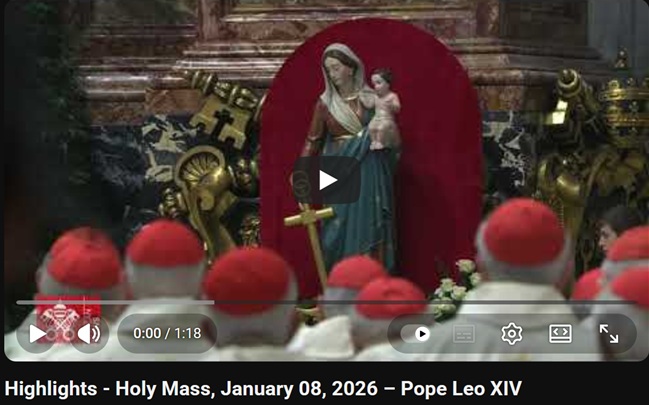
Click below for the Highlights of Pope Leo XIV’s Holy Mass on the Consistory with the Cardinals
In his address, Pope Leo XIV emphasised the importance of fraternal solidarity, noting that the Consistory serves as a significant moment of grace that reflects their collective dedication to the service of the Church. As we are aware, the term “Consistory” (derived from the Latin “Consistorium,” meaning “assembly”) is rooted in the verb “consistere,” which signifies “to stand still.” In a similar regard, each of us has taken a momentary pause to be present here today. “We have temporarily set aside our individual activities and deferred even important commitments in order to come together and prayerfully consider the guidance the Lord wishes to provide for the benefit of His faithful,” he stated. Calling it a “prophetic gesture” for our frenetic world, Pope Leo said the act of pausing to pray and listen together helps bring us into focus on our goal, so that we never flail in blind action.
Beloved, let us love one another, because love is from God” (1Jn 4:7). The liturgy sets this exhortation before us as we celebrate the Extraordinary Consistory, a moment of grace wherein our unity in the service of the Church finds its expression.
As we know, the word Consistory (Consistorium, or “assembly”) can be understood through the root of the verb consistere, meaning “to stand still.” Indeed, all of us have “paused” in order to be here. We have set aside our activities for a time, and even cancelled important commitments, so as to discern together what the Lord is asking of us for the good of his people. This itself is already a highly significant and prophetic gesture, particularly in the context of the frenetic society in which we live
Pope Leo XIV continued, this serves as a reminder of the importance, in all areas of our work and life, of taking moments to pause, reflect, and seek guidance. By doing so, we can clarify our goals and ensure that our efforts and resources are aligned accordingly, avoiding aimless activity or unnecessary exertion, as emphasized in 1 Corinthians 9:26. Our gathering is not about advancing individual or team agendas, but about dedicating our plans and intentions to a higher discernment—one that surpasses our understanding and comes from a place of wisdom beyond ourselves, as described in Isaiah 55:9.
It reminds us of the importance, in every aspect of life, of stopping to pray, listen and reflect. In doing so, we refocus our attention ever more clearly on our goal, directing every effort and resource towards it, lest we risk running blindly or “beating the air” in vain, as the Apostle Paul warns (cf. 1Cor 9:26). We gather not to promote personal or group “agendas,” but to entrust our plans and inspirations to a discernment that transcends us – “as the heavens are higher than the earth” (Is 55:9) – and which comes only from the Lord.
Therefore, it is essential that during this Eucharistic celebration, we bring forth our individual hopes and ideas and present them on the altar. Along with the gift of our lives, we offer them to the Father in communion with the Sacrifice of Christ, so that they may be renewed, enlightened, united, and transformed by grace into one bread. Only through this process can we genuinely learn to hear His voice and to accept it through the generous gift we extend to one another—this is the fundamental purpose of our gathering.
For this reason, it is important that during this Eucharist, we place each of our hopes and ideas upon the altar. Together with the gift of our lives, we offer them to the Father in union with the Sacrifice of Christ, so that we may receive them back purified, enlightened, united and transformed by grace into one Bread. Indeed, only in this way will we truly know how to listen to his voice, and to welcome it through the gift that we are to one another – which is the very reason we have gathered.
Our college is distinguished by a diverse array of skills and talents; however, its fundamental purpose is to serve as a community rooted in faith. When individuals share their unique gifts with dedication and humility, and seek to align their efforts with divine guidance, these contributions are most likely to yield meaningful and prosperous outcomes.
Our College, while rich in many skills and remarkable gifts, is not called primarily to be a mere group of experts, but a community of faith. Only when the gifts that each person brings are offered to the Lord and returned by him, will they bear the greatest fruit according to his providence.
Furthermore, the love of God, of which we are called to be followers and witnesses, is a relational and Trinitarian love. It serves as the foundation of the spirituality of communion, through which the Church seeks to be a welcoming community—both a home and a place of learning
Expressing hope that this spirituality would flourish at the dawn of the third millennium, Saint John Paul II described it as “the heart’s contemplation of the mystery of the Trinity dwelling within us, and whose light we are called to recognize shining on the faces of our brothers and sisters around us” (ibid.)
Moreover, God’s love, of which we are disciples and apostles, is a “Trinitarian” and “relational” love. It is the very source of that spirituality of communion, by which the Bride of Christ lives and desires to be a home and a school (cf. Apostolic Letter Novo Millennio Ineunte, 6 January 2001, 43). Expressing the hope that this spirituality would flourish at the dawn of the third millennium, Saint John Paul II described it as “the heart’s contemplation of the mystery of the Trinity dwelling in us, and whose light we must also be able to see shining on the face of the brothers and sisters around us” (ibid.).
Our period of reflection is fundamentally an expression of our sincere commitment to serve and uphold our values—toward God, the Church, and all people around the world. Through this process, we seek to be guided by the Holy Spirit, cultivating growth through prayer, silence, and meaningful dialogue with one another. In sharing our perspectives, we aim to represent the diverse communities and individuals whom we are privileged to serve in various parts of the world. We approach this practice with humility and generosity, recognising that our efforts are sustained by grace.
Our “pausing,” then, is first and foremost a profound act of love for God, for the Church and for the men and women of the whole world. Through this, we allow ourselves to be formed by the Spirit: primarily in prayer and silence, but also by facing one another and listening to one another. In our sharing, we become a voice for all those whom the Lord has entrusted to our pastoral care in many different parts of the world.
The Consistory, he said, is thus “an act to be lived with a humble and generous heart, in the awareness that it is by grace that we are here, and that there is nothing of what we carry that we have not received, as a gift and a talent not to be wasted, but to be invested with prudence and courage.” Pope Leo XIV went on to recall the “multifaceted beauty” of the Church, to which the Consistory bears witness in its “unity of grace and faith.” Additionally, we understand that all our capabilities and resources are gifts received, and therefore, we are called to use them wisely and with integrity, exercising prudence and courage in our stewardship.(cf. Mt 25:14–30).
We must live this act with humble and generous hearts, aware that it is by grace that we are here. Moreover, we bring nothing that we have not first received as a gift or talent, which are not to be squandered, but invested with prudence and courage (cf. Mt 25:14–30).
Saint Leo the Great emphasised that it is highly commendable in the eyes of the Lord when the entire community of Christ unites in shared responsibilities, working together with the guidance of the Holy Spirit. In this spirit, we aim to serve others by meeting their needs—feeding the hungry, clothing the unclothed, visiting the sick—without pursuing personal interests but prioritising the well-being of others. It is our collective aspiration to collaborate harmoniously as members of the Mystical Body of Christ, striving for the common good (cf. Eph 4:11–13).
Saint Leo the Great taught that “it is a great and very precious thing in the sight of the Lord when the whole people of Christ apply themselves together to the same duties, and all ranks and orders… cooperate with one and the same Spirit.” In this way, “the hungry are fed, the naked clothed, the sick visited, and no one seeks his or her own interests, but those of others” (Sermon 88, 4). This is the spirit in which we wish to work together: the spirit of those who desire that every member of the Mystical Body of Christ will cooperate in an orderly way for the good of all (cf. Eph 4:11–13).
May we conduct our ministries with professionalism and reverence, motivated by the Holy Spirit, taking pride in our efforts and trusting in the fruitful outcomes. Additionally, let us support and celebrate the contributions of our colleagues, rejoicing in their successes as they flourish (cf. Saint Leo the Great, Sermon 88, 4–5).
May we fully carry out our ministry with dignity under the guidance of the Holy Spirit, happy to offer our own labor and to see it its fruits mature. May we likewise welcome the labors of others and rejoice in seeing them flourish (cf. Saint Leo the Great, Sermon 88, 5).
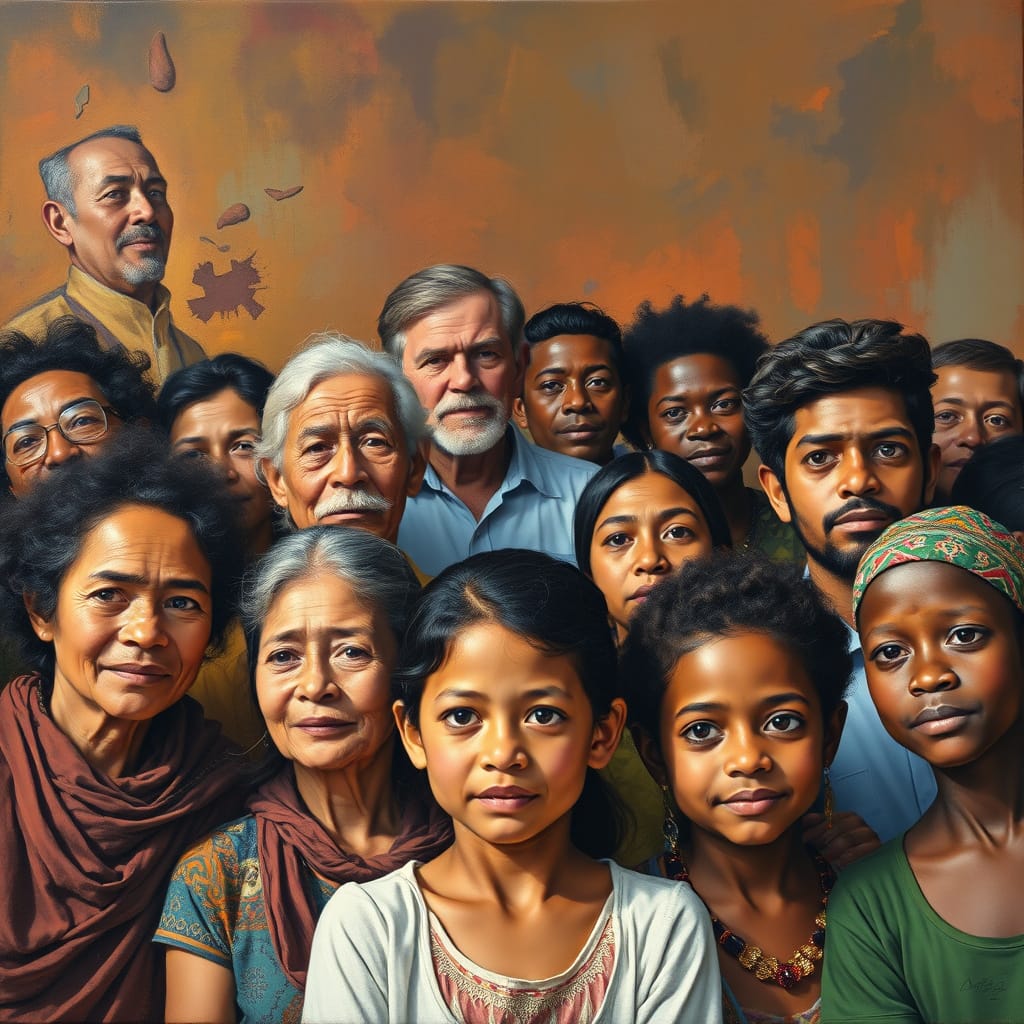
For over two thousand years, the Church has exemplified this profound mystery through its rich diversity and unity (cf. , Francis Encyclical Letter , Fratelli Tutti 280). Our assembly reflects this inherent beauty through the variety of backgrounds, ages, and cultures represented, as well as the shared grace and faith that unite us as brothers and sisters.
For two millennia, the Church has embodied this mystery in its multifaceted beauty (cf. Francis, Encyclical Letter Fratelli Tutti, 280). This very assembly bears witness to it through the variety of our origins and ages, and in the unity of grace and faith that gathers us together and makes us brothers.
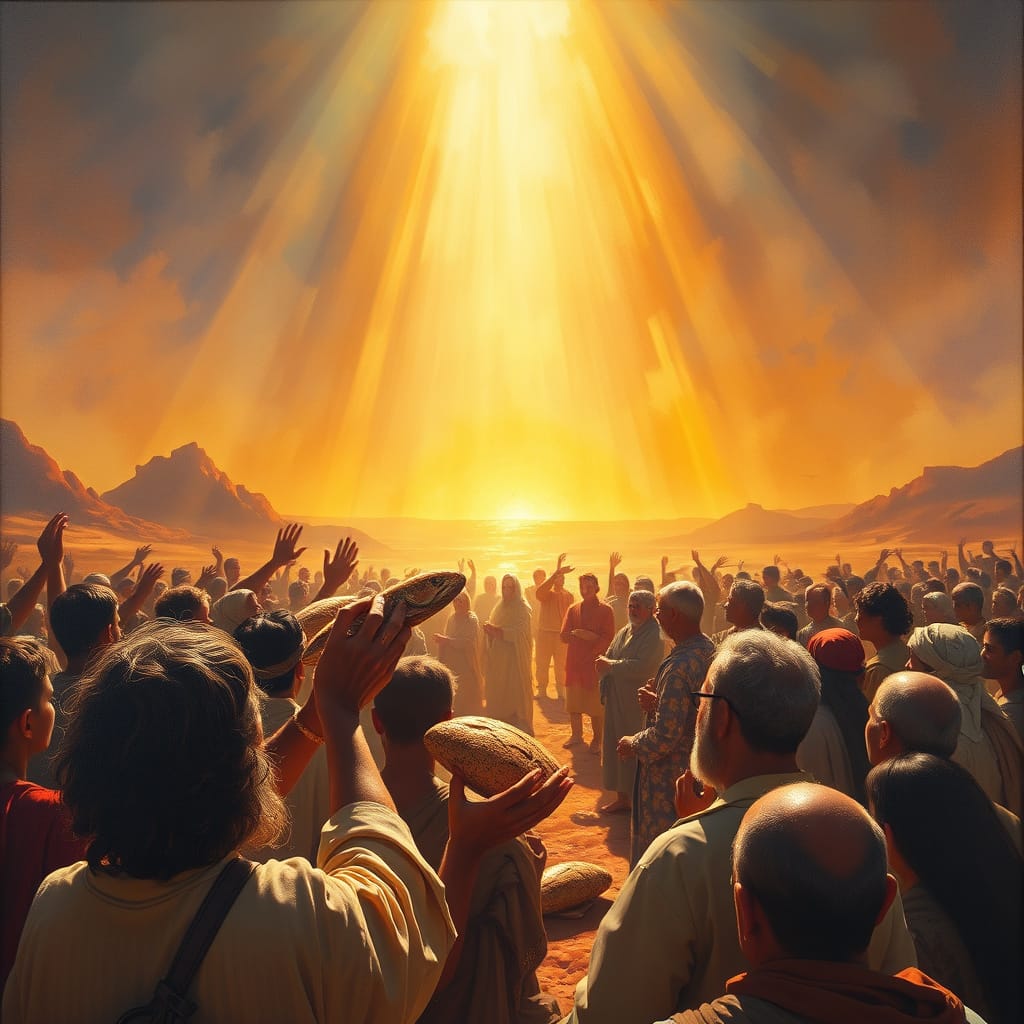
We recognise that we are gathering amid a multitude of people eager for goodness and peace. In a world characterised by contrasting experiences—richness and hardship, abundance and deprivation, the ongoing struggle for survival alongside deep existential challenges—it is understandable to feel ill-equipped at times. When faced with the call of the Master to “Give them something to eat” (Mk 6:37),
Certainly, we stand before a “great crowd” of humanity hungry for goodness and peace. In a world where satisfaction and hunger, abundance and suffering, and the struggle for survival together with a desperate existential emptiness continue to divide and wound individuals, communities and nations, we may feel inadequate. Faced with the words of the Master, “You give them something to eat” (Mk 6:37),
we may feel as the disciples did, that our resources are insufficient. Nevertheless, Jesus encourages us to reflect on what we do have: “How many loaves have you? Go and see” (Mk 6:38)
we too might feel, like the disciples, that we lack the necessary means. Yet Jesus repeats to us once more, “How many loaves have you? Go and see” (Mk 6:38)
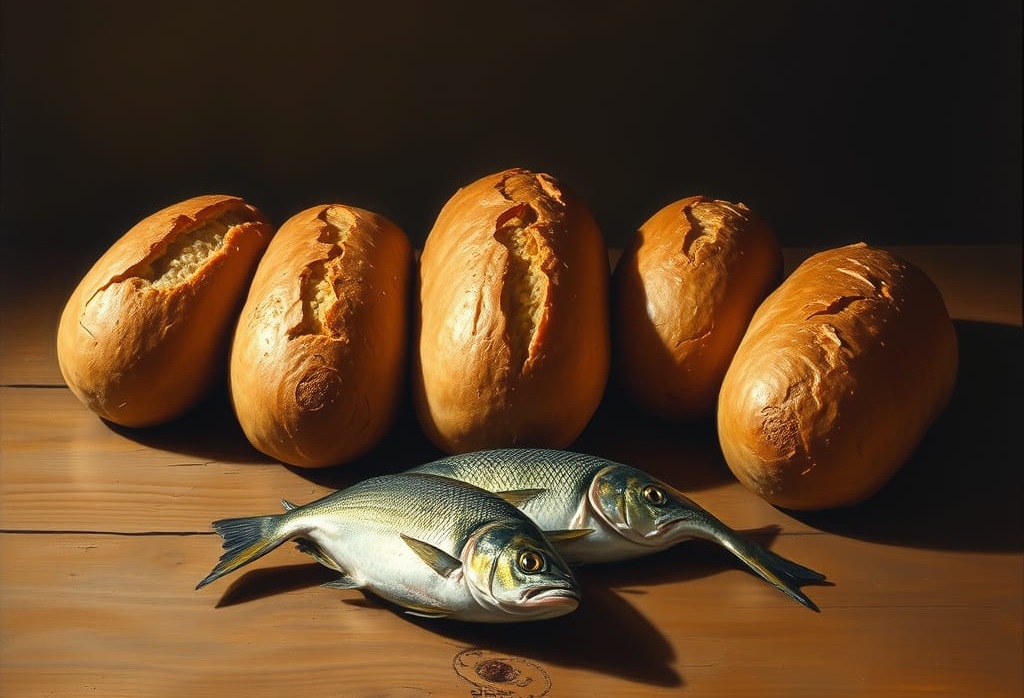
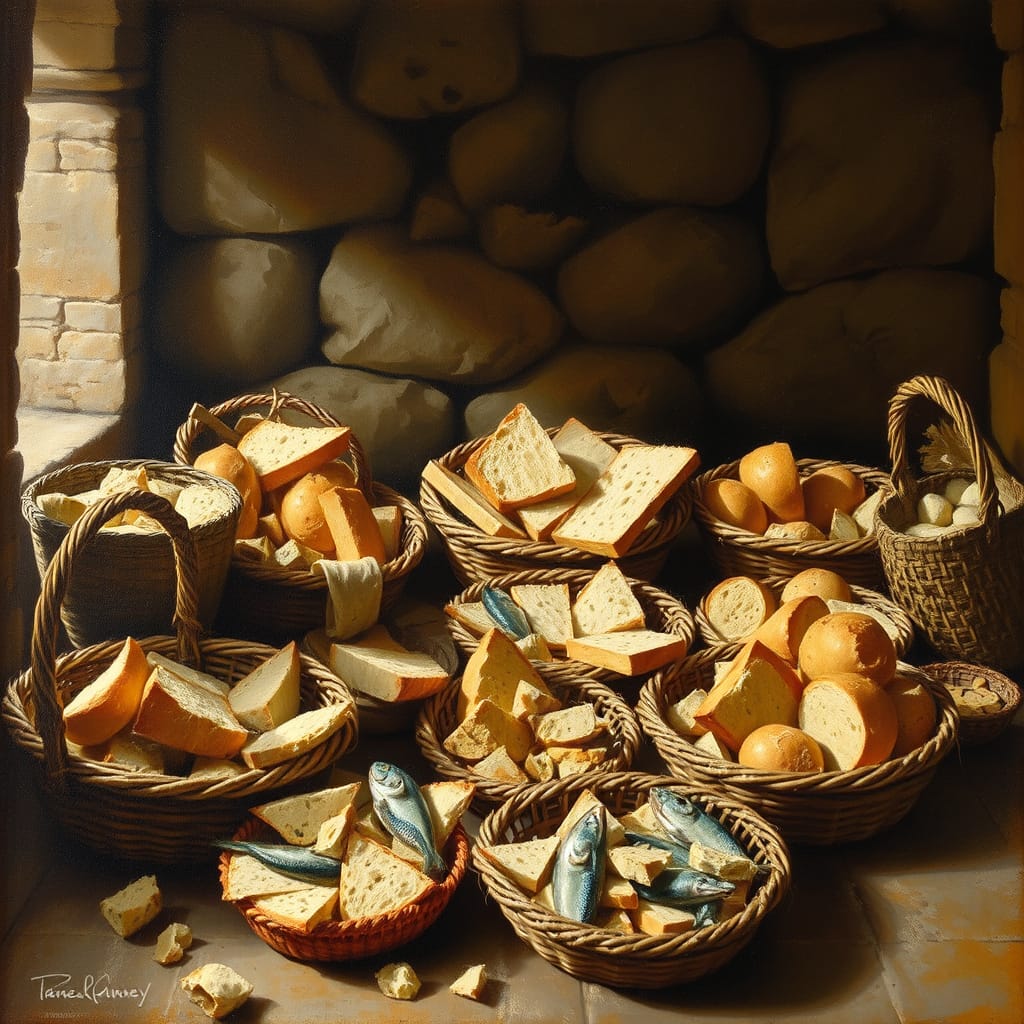
This is something we can do together. We may not always find immediate solutions to the problems we face, yet in every place and circumstance, we will be able to help one another – and in particular, to help the Pope – to find the “five loaves and two fish” that providence never fails to provide wherever his children ask for help. When we welcome these gifts, hand them over, receive and distribute them, they are enriched by God’s blessing and by the faith and love of all, ensuring that no one lacks what is necessary (cf. Mk 6:42).
This is something we can do together. We may not always find immediate solutions to the problems we face, yet in every place and circumstance, we will be able to help one another – and in particular, to help the Pope – to find the “five loaves and two fish” that providence never fails to provide wherever his children ask for help. When we welcome these gifts, hand them over, receive and distribute them, they are enriched by God’s blessing and by the faith and love of all, ensuring that no one lacks what is necessary (cf. Mk 6:42).
Pope Leo emphasised that the purpose of the Cardinals’ gathering is to support one another and assist the Holy Father in serving the Church.
He expressed that the contributions each Cardinal makes through their service to the Church are significant, highly personal, and uniquely valuable to the entire community. Moreover, he acknowledged that the responsibility entrusted to them, in collaboration with the Successor of Peter, is both serious and weighty, underscoring the importance of their role. He described their collective efforts as akin to receiving and sharing the “five loaves and two fishes” that divine Providence generously provides to those who seek assistance.
Beloved brothers, what you offer to the Church through your service, at every level, is something profound and very personal, unique to each of you and precious to all. The responsibility you share with the Successor of Peter is indeed weighty and demanding.
The responsibility you share with the successor of Peter is indeed significant and weighty. For this reason, I extend my sincere appreciation to you, and I would like to conclude by entrusting our work and mission to the Lord, drawing from the words of Saint Augustine: “You give us many good things when we pray, and whatever good we have received before we prayed for it, we have received from You. We also receive from You the grace that later allows us to recognise this… Remember, Lord, that we are but dust. You have made man from dust” (Confessions, 10, xxxi, 45). Therefore, we offer this prayer: “Grant what You command, and grant us the grace to do what You command” (ibid.).
For this reason, I offer you my heartfelt thanks, and I wish to conclude by entrusting our work and our mission to the Lord with the words of Saint Augustine: “You give us many things when we pray, and whatever good we received before we prayed for it, we have received from you. We have also received from you the grace that later we came to realize this… Remember, Lord ‘that we are but dust.’ You have made man of the dust” (Confessions, 10, xxxi, 45). Therefore, we say to you: “Grant what you command, and command what you will” (ibid.).
In conclusion, the Pope thanked the Cardinals for their service, and entrusted their work together to the Lord.