Click Below for the video highlights for Pope Leo XIV’s First Consistory for Cardinals
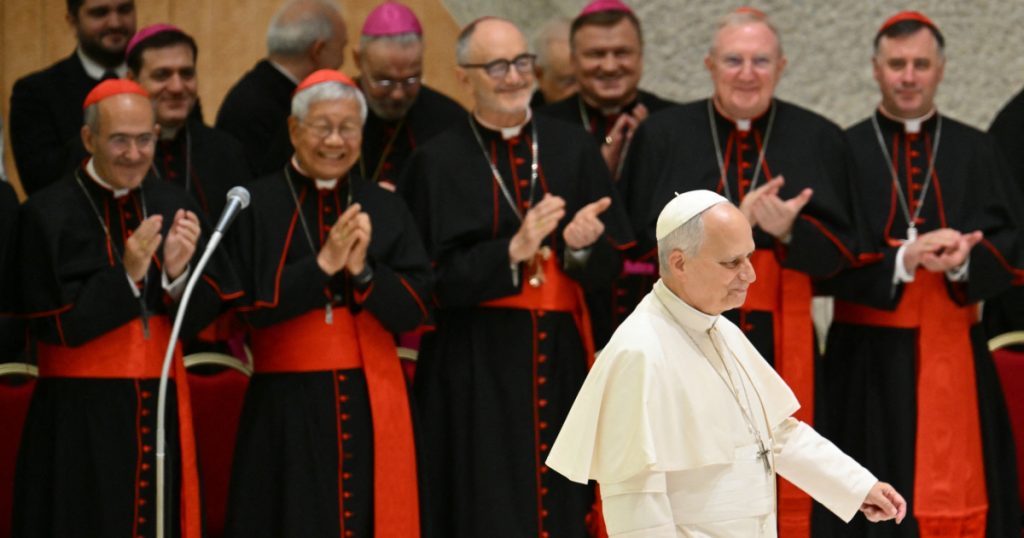
A Turning Point for the Church’s Future
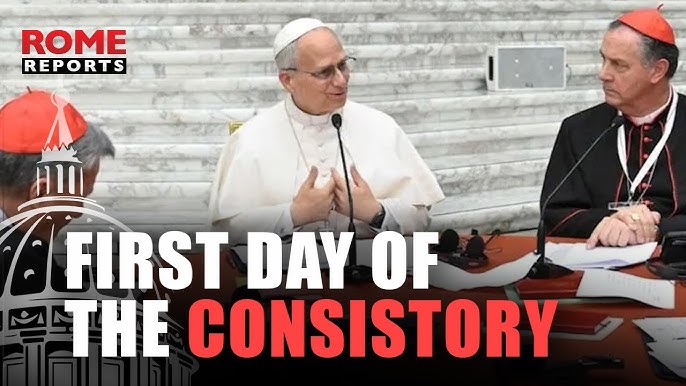
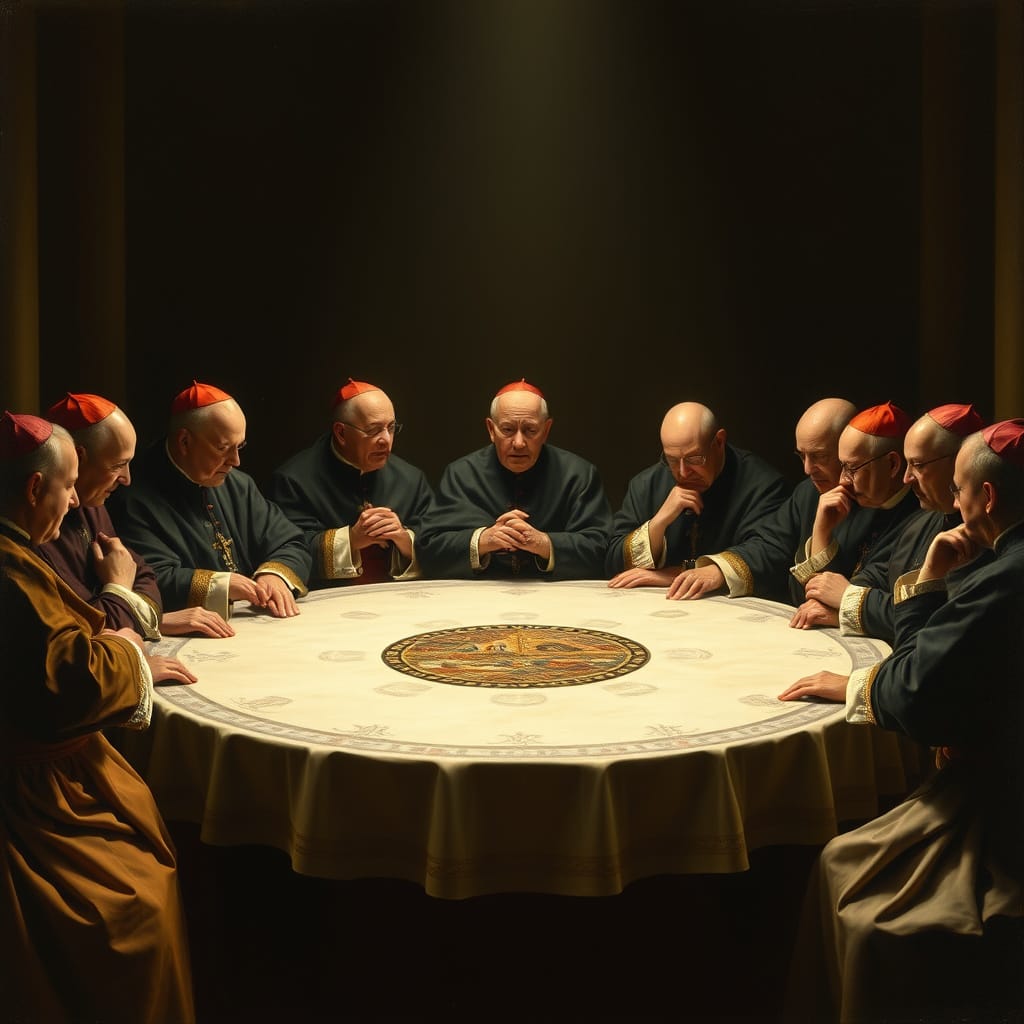
Cardinals gather for first day of the extraordinary consistory in Rome
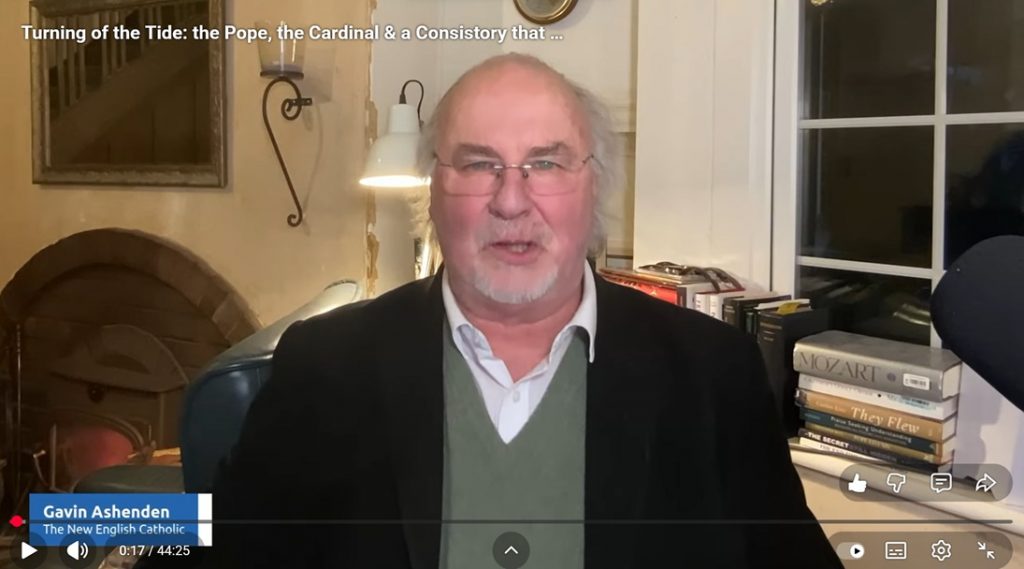
Click Below for the video of Dr Gavin Ashenden’s assesment of Cardinal Zen of Hong Kong outburst at the consistory
Turning of the Tide: the Pope, the Cardinal & a Consistory that changed the Direction of the Church
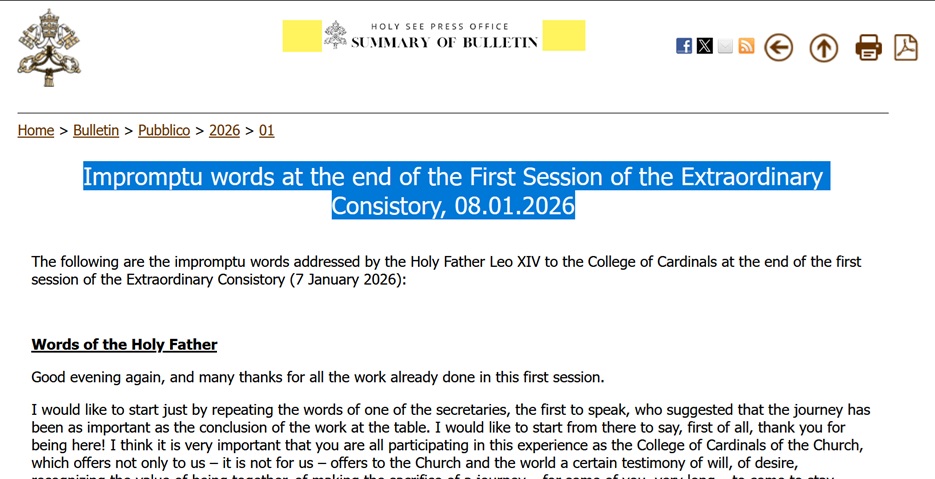
Click Below for the full text of Pope Leo XIV’s Impromptu words at the end of the First Session of the consistory
Impromptu words at the end of the First Session of the Extraordinary Consistory
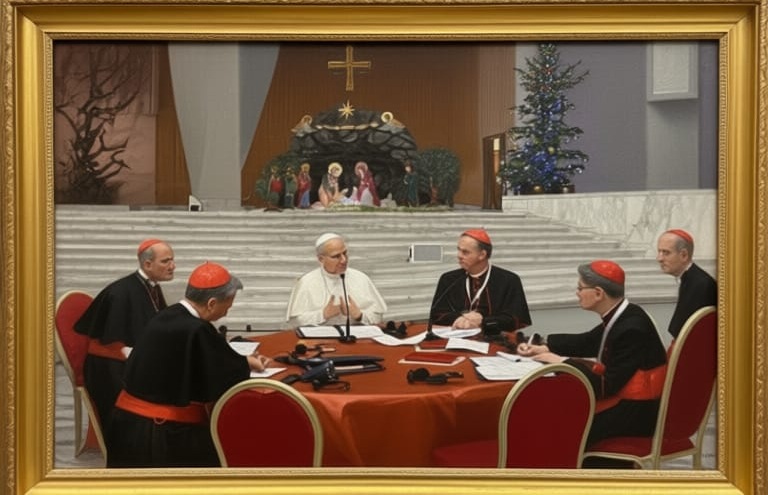
Click Here For Extraordinary Consistory Multimedia Photos
This experience serves as a meaningful opportunity for the Church and the broader community to demonstrate their commitment to unity and collaboration. It highlights the importance of making the personal effort to travel—sometimes a considerable distance—with the purpose of collectively seeking the guidance of the Holy Spirit for the present and future direction of the Church.
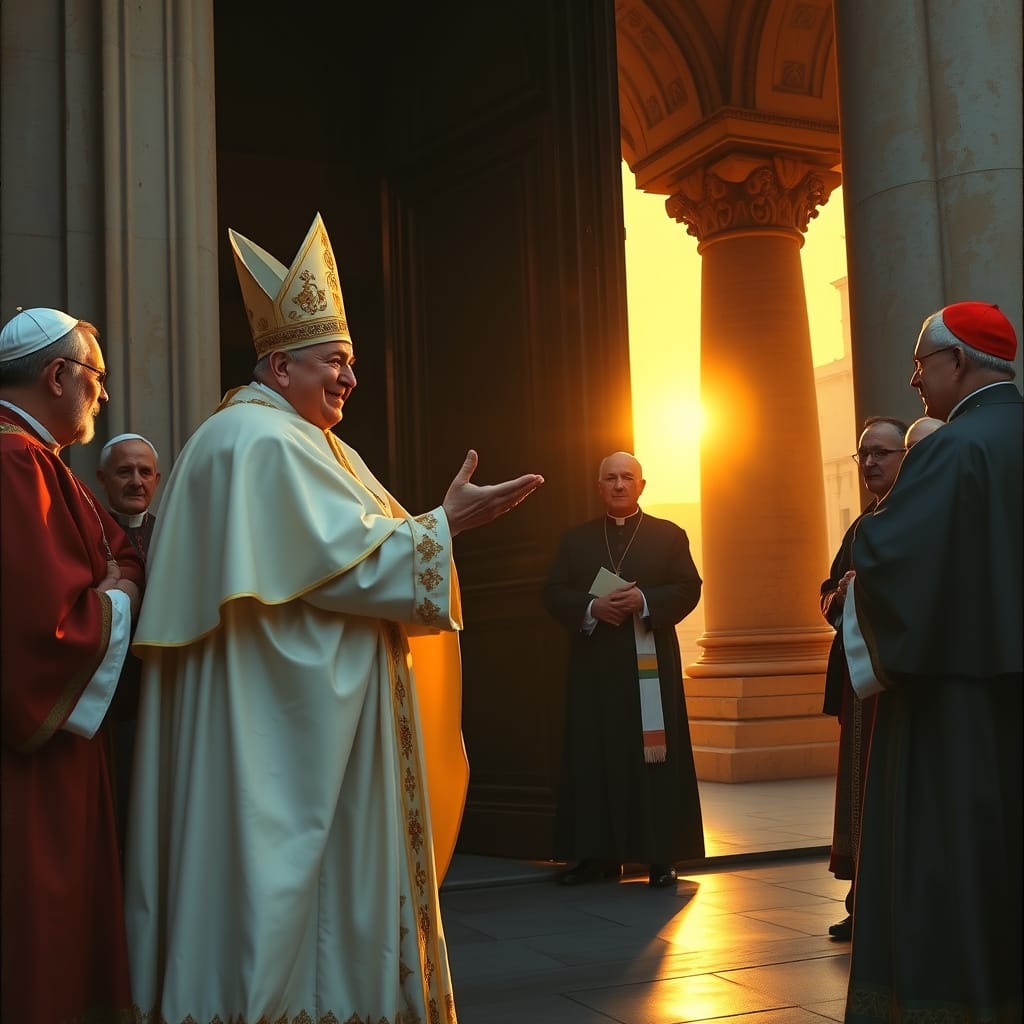
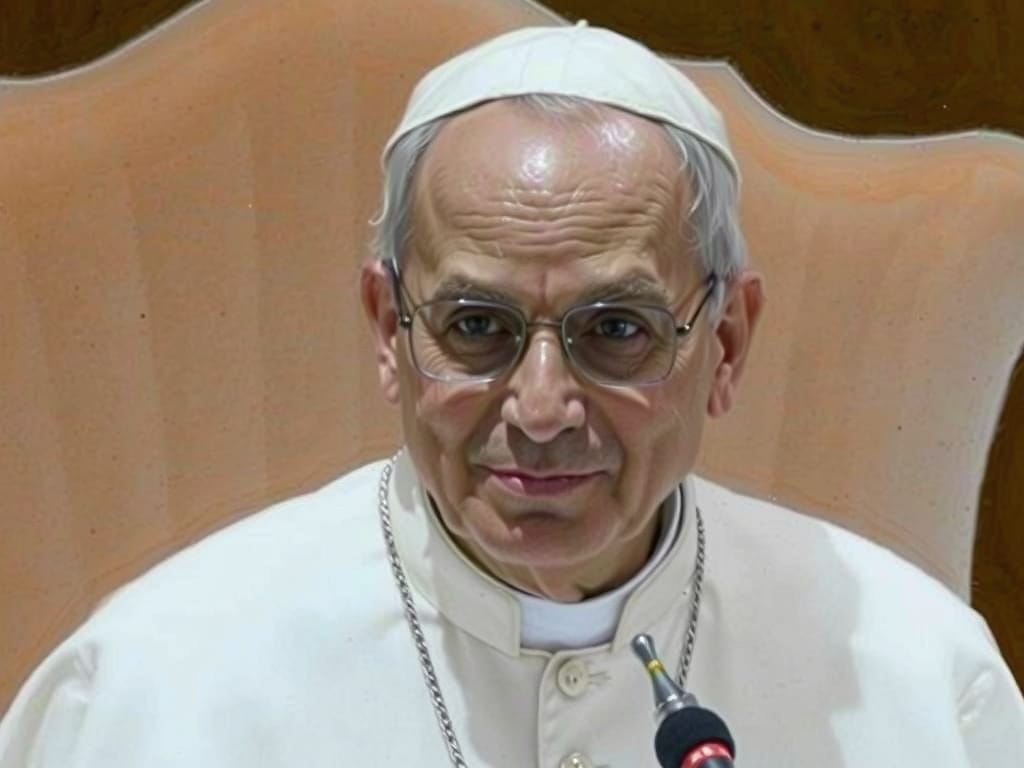
Pope Leo XIV stated, “I am here to listen,” during his opening remarks at the Extraordinary Consistory of Cardinals held at the Vatican on January 7-8. The Pope commenced by expressing his sincere pleasure in welcoming the Cardinals to Rome on the day following the Feast of Epiphany, and he prayed that the Holy Spirit would guide their deliberations during these two meaningful days dedicated to reflection and dialogue.
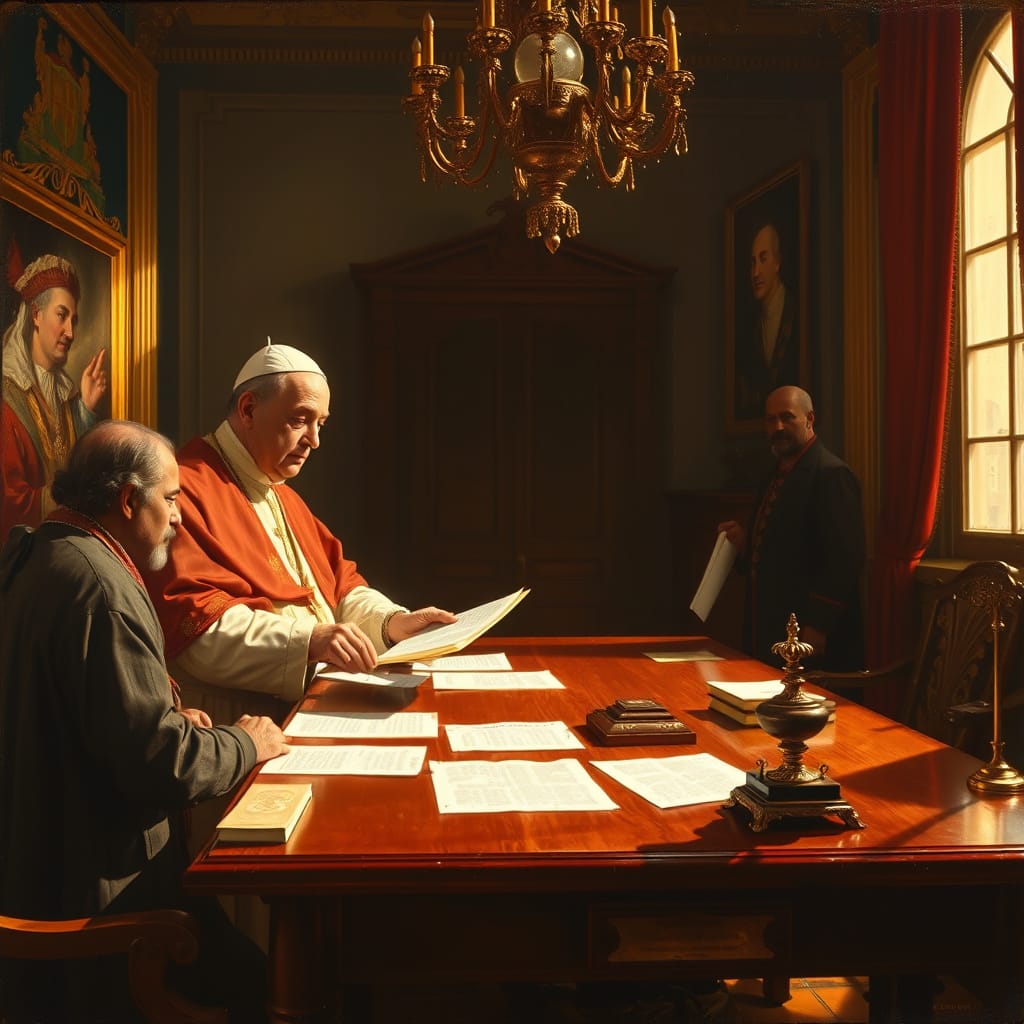
In his concise greeting, the Pope referenced remarks made by one of the secretaries, noting that “the journey was just as important as the conclusion of the work at the table.” Pope Leo expressed his hope that this sense of collegiality will serve as a positive outcome of the Consistory.
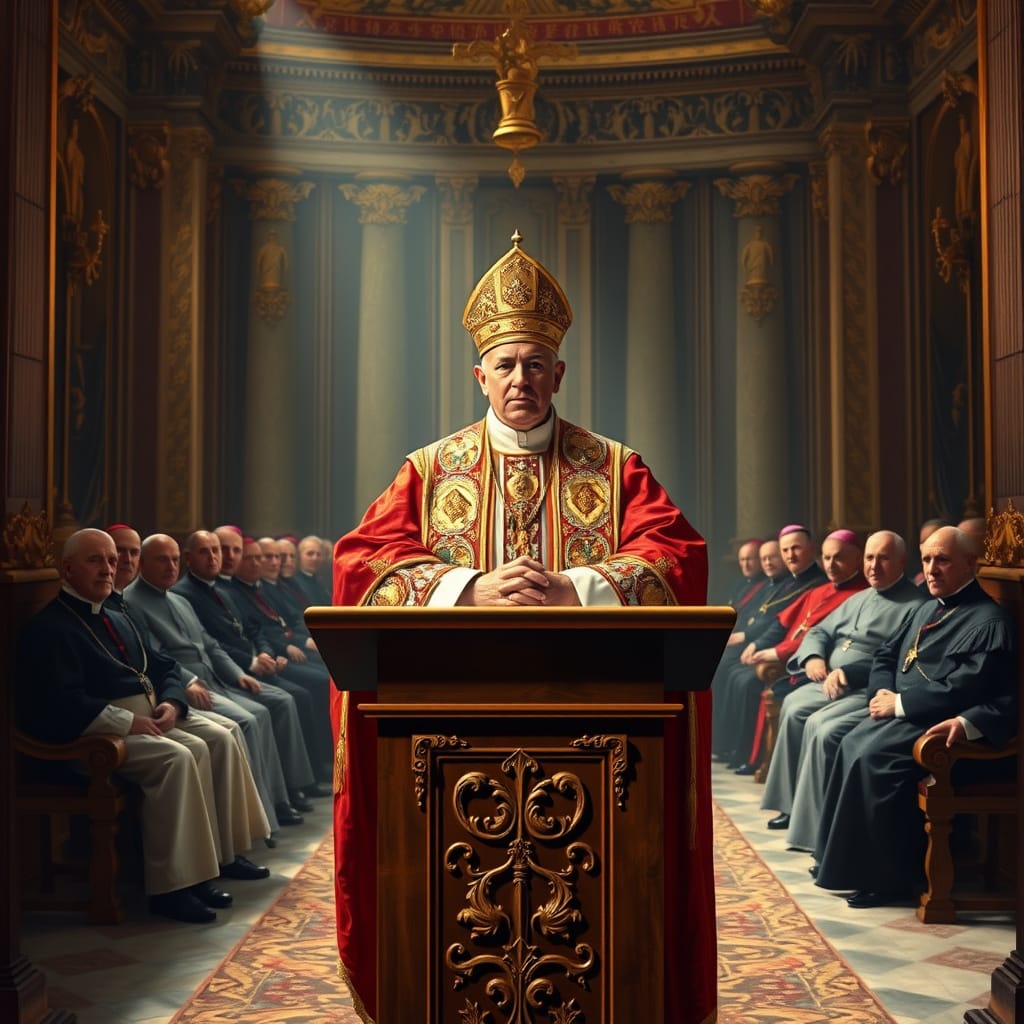
He emphasised that their gathering, spanning a day and a half, will serve to guide their future efforts. The Pope underscored that their purpose is not merely to produce a final document, but to engage in an ongoing conversation that will enhance his ability to serve the mission of the Church as a whole.
Pope Leo XIV concluded the initial session of the meeting with the cardinals with informal remarks, following discussions within the linguistic groups in the Saint Paul VI Audience Hall. He expressed appreciation for their selection of two central themes—synodality and mission in the context of the Evangelii Gaudium —from a list of four proposals, noting:
Yet, “due to time constraints, and in order to encourage a genuinely in-depth analysis,” he said, only two of them will be discussed specifically, being guided by this question: “Looking at the path of the next one or two years, what considerations and priorities could guide the action of the Holy Father and of the Curia regarding each theme?”
Yet, “due to time constraints, and in order to encourage a genuinely in-depth analysis,” he said, only two of them will be discussed specifically, being guided by this question: “Looking at the path of the next one or two years, what considerations and priorities could guide the action of the Holy Father and of the Curia regarding each theme?”
This, he said, would be the Cardinals’ way of proceeding, as they seek to be “attentive to the heart, mind and spirit of each, listening to one another and expressing only the main point and in a succinct manner, so that all can speak.”
This, he said, would be the Cardinals’ way of proceeding, as they seek to be “attentive to the heart, mind and spirit of each, listening to one another and expressing only the main point and in a succinct manner, so that all can speak.”
(Click below for the Full Text of )
Evangelii Gaudium
“Thank you for this choice; the other themes remain important. There are ongoing, specific issues that require our continued attention.”
The Pope reaffirmed that the primary purpose of the Church is not solely for cardinals, bishops, or clergy, but fundamentally to proclaim the Gospel. Synodality and mission, as discussed in light of Evangelii Gaudium, (Evangelii Gaudium) were selected by a significant consensus from a list that also featured the topics of liturgy and the Apostolic Constitution Praedicate Evangelium. (Praedicate Evangelium). The Synod and synodality, he said, express the search for how to be a missionary Church in today’s world, while Evangelii gaudium (Evangelii Gaudium) calls the Church to “proclaim the kerygma, (The dissemination and articulation of the Christian message) the Gospel, with Christ at the centre.”
And so these two themes: Synod and synodality, as an expression of the search for how to be a missionary Church in today’s world, and Evangelii Gaudium , proclaiming the kerygma , the Gospel with Christ at its center. This is our mission.
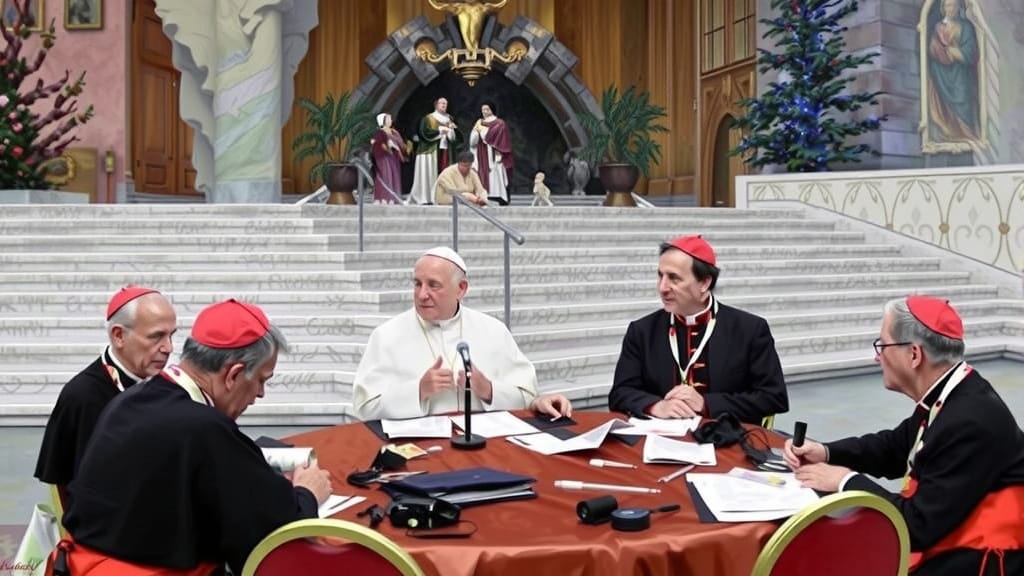
“I feel the need to be able to count on you: it is you who have called this servant to this mission. Therefore, I believe it is important that we work together, that we discern together, that we seek what the Spirit is asking of us.” At the conclusion of the first day of the Extraordinary Consistory he convened in the Saint Paul VI Audience Hall, Pope Leo XIV once again asked the 170 cardinals present for their support and assistance.
Pope Leo did not participate directly in the group discussions; however, he attended the plenary session, during which the nine secretaries of the tables—comprising cardinals from outside the Roman Curia—presented their work and provided a brief overview, limited to three minutes, of the rationale behind selecting their respective themes.
As Pope Leo observed, members of the Roman Curia are more readily accessible for consultation.
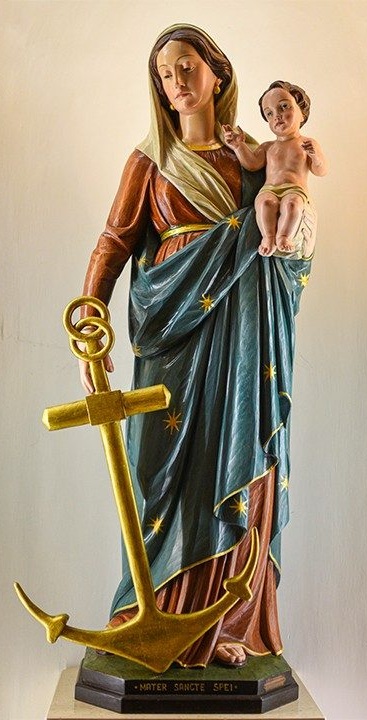
At the conclusion of the session, the Pope acknowledged the valuable contributions of the cardinals, expressing gratitude for their active participation and highlighting the importance of the consensus reached across the various discussion groups. He emphasized that the topics under consideration are interconnected and should be approached comprehensively. Pope Leo XIV closed his remarks with a sincere prayer, asking for the Holy Spirit’s guidance and inspiration in their deliberations, honoring the presence of an image of the Lady of Hope, the Blessed Virgin Mary, Mother of the Church, from the parish of Saint Mark the Evangelist in San Marco of Castellabate, located in the province of Salerno, Italy.
“One theme cannot be separated from the other”
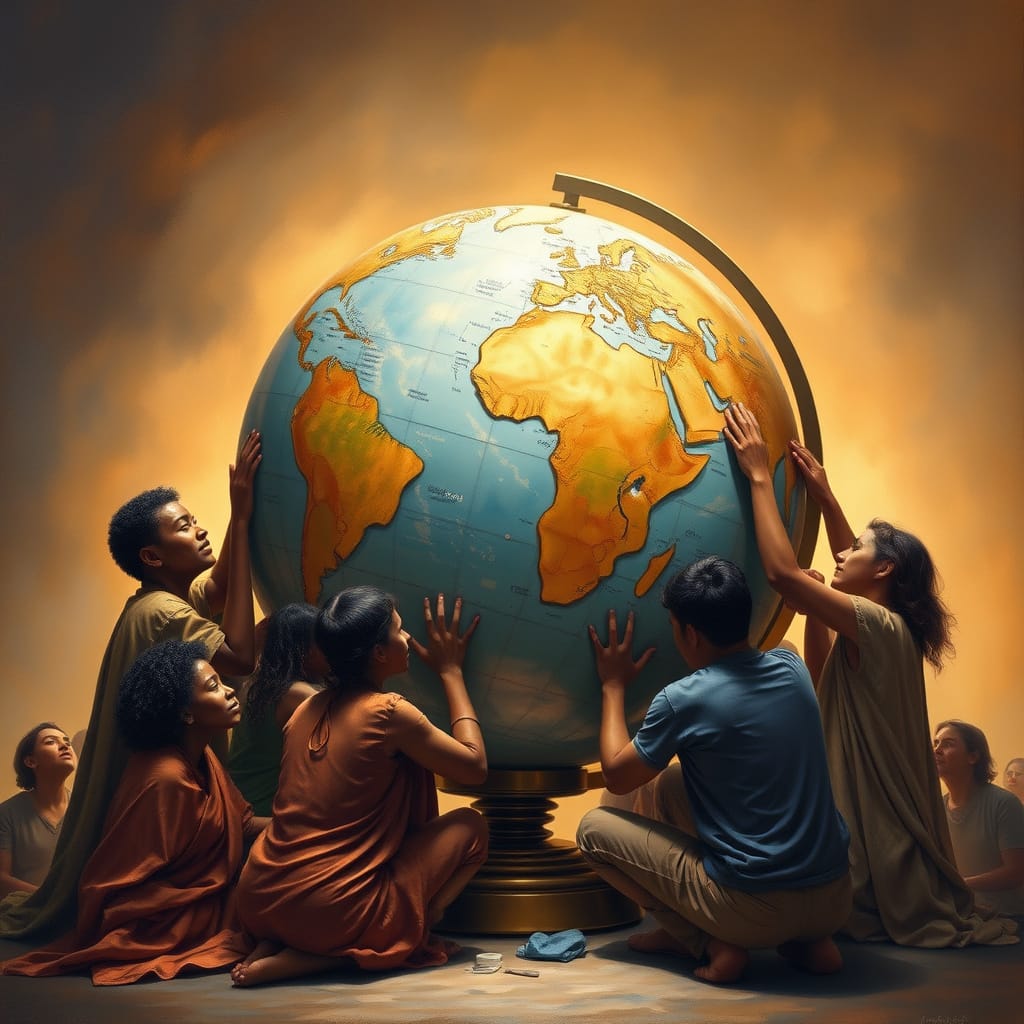
Pope Leo emphasised that there is much for us to consider collectively; however, our aim as a Church is to maintain a proactive, outward-facing approach—one that is mission-oriented and attentive to the needs of others beyond our immediate community.
there is much for us to consider collectively; however, our aim as a Church is to maintain a proactive, outward-facing approach—one that is mission-oriented and attentive to the needs of others beyond our immediate community.
“The other themes are not lost,” he added. “There are very concrete, specific issues that we still need to address.” He also expressed the hope that each cardinal would “truly feel free” to communicate with him or with others as part of an ongoing “process of dialogue and discernment.”
The journey is as important as the result
“Is there life in our Church?”
In his concluding address, the Pope returned to passages from his homily the previous day during the Mass for the Solemnity of the Epiphany in St. Peter’s Basilica, following the closing of the Holy Door. In particular, he repeated the question: “Let us ask ourselves: is there life in our Church?”
“I am convinced that there is,” the Bishop of Rome said. “These months—if I had not experienced it before—I have had countless beautiful experiences of the life of the Church. And yet the question remains: is there life in our Church? Is there space for what is being born? Do we love and proclaim a God who sets us back on the journey?”
There is indeed a journey still to be made, the Pope said, and one cannot take refuge in the idea that “everything is already done, finished—do as we have always done.” The Consistory therefore serves to help the Church walk together.
Recalling another passage from his homily, and citing King Herod, Leo said that “fear blinds,” while the Gospel “sets us free,” making us “prudent,” but also “bold, attentive, and creative,” and opening “paths different from those already taken.”
For Pope Leo XIV, the Consistory is thus “one of the many expressions through which we can truly experience the Church’s newness.” “The Holy Spirit is alive and present also among us,” he said. “How beautiful it is to find ourselves together in the boat!”
…to come and be together and seek together what the Holy Spirit wants for the Church today and tomorrow. So for this reason, I truly think it is important, even if it is a very short time, but it is a very important time for me too, because I feel, I need to count on you: it is you who have called this servant to this mission! So, I would like to say, I think it is important that we work together, that we discern together, that we seek what the Spirit asks of us.
FULL TEXT Words of the Holy Father Pope Leo XIV:
Good evening again, and thank you very much for all the work you’ve done in this first session.
I would like to begin by simply repeating the words of one of the secretaries, the first to speak, who suggested that the journey was as important as the conclusion of the work at the table. I would like to start from there by first saying thank you for being here! I think it is very important that all of you participate in this experience as the College of Cardinals of the Church, which offers not only us—it is not for us—but also the Church and the world a certain testimony of will, of desire, recognizing the value of being together, of making the sacrifice of a journey—for some of you a very long one—to come and be together and seek together what the Holy Spirit wants for the Church today and tomorrow. So for this reason, I truly think it is important, even if it is a very short time, but it is a very important time for me too, because I feel, I need to count on you: it is you who have called this servant to this mission! So, I would like to say, I think it is important that we work together, that we discern together, that we seek what the Spirit asks of us.
If you’ll allow me, I’ll repeat some words from yesterday’s homily on the Feast of the Epiphany. Many of you were present, but I’ll say it again. “Let us ask ourselves: is there life in our Church?” I’m convinced there is, certainly. These past months, if I hadn’t lived it before, I’ve certainly had many beautiful experiences of the life of the Church. But the question remains: is there life in our Church? “Is there room for what is born? Do we love and proclaim a God who sets us on a new path?” We can’t close ourselves off and say, “Everything is already done, finished, let’s do as we’ve always done.” There truly is a path, and with the work of these days, we are walking it together.
In the story, Herod fears for his throne; he is agitated by what he feels is beyond his control, he tries to take advantage of the Magi’s desire, and he tries to twist their quest to his own advantage. Herod is ready to lie, he is willing to do anything. Fear, in fact, blinds. The joy of the Gospel, however, liberates. It makes us prudent, yes, but also bold, attentive, and creative; it suggests paths different from those already traveled. This [encounter] for me is one of the many expressions in which we can truly experience the newness of the Church. The Holy Spirit is alive and present among us too. How beautiful it is to be together in the boat! That image that Cardinal Radcliffe offered us in his reflection this afternoon, as if to say: we are together. There can be something that scares us; there is doubt: but where are we going? How will we end up? But if we place our trust in the Lord, in his presence, we can do so much.
Thank you for your choices. I think the overwhelming majority of the discussions agreed upon the choice made by all the groups is quite clear. And it also seems very important to me, from other comments, that we cannot separate one theme from the other. In fact, there is much we could explore together. But we want to be a Church that doesn’t only look at itself, that is missionary, that looks beyond, at others. The Church’s raison d’être is not for the cardinals, nor for the bishops, nor for the clergy. Its raison d’être is to proclaim the Gospel. And so these two themes: Synod and synodality, as an expression of the search for how to be a missionary Church in today’s world, and Evangelii Gaudium , proclaiming the kerygma , the Gospel with Christ at its center. This is our mission.
And so I thank you. This will help us organise ourselves for tomorrow’s work in the two sessions. The other topics should not be overlooked. There are very concrete, specific issues that we still need to address. I hope each of you will feel truly free to communicate with me or others, and we will continue this process of dialogue and discernment.
Okay, that’s all. Thanks for this service. I don’t know if I made it past three minutes. The moderator was very kind! Have a good evening, and I’ll see you tomorrow morning.
Translated from Source: https://press.vatican.va/content/salastampa/it/bollettino/pubblico/2026/01/08/0021/00044.html